CG SCERT / Chhattisgarh Board Class 4 Mathematics Solutions | 2026-27 Official Edition
📚 Lesson Overview:
- Board: Chhattisgarh Board of Secondary Education (CGBSE) / CG SCERT Raipur
- Textbook: Maths Mela / Ganit Mela (Class 4 NEP Official Edition)
- Chapter 12: Ticking Clocks and Turning Calendar
- Medium: English Medium & हिंदी माध्यम
- Coverage: Concept Summary, Solved In-Text Activities, Exercises & FAQs
Welcome to the complete, 100% textbook-grounded CG Board Class 4 Maths Chapter 12 Solutions: Ticking Clocks and Turning Calendar. Prepared strictly according to the new 2026-27 SCERT Chhattisgarh Raipur curriculum, this guide helps Class 4 students build strong problem-solving skills.
Chapter Overview & Key Concepts
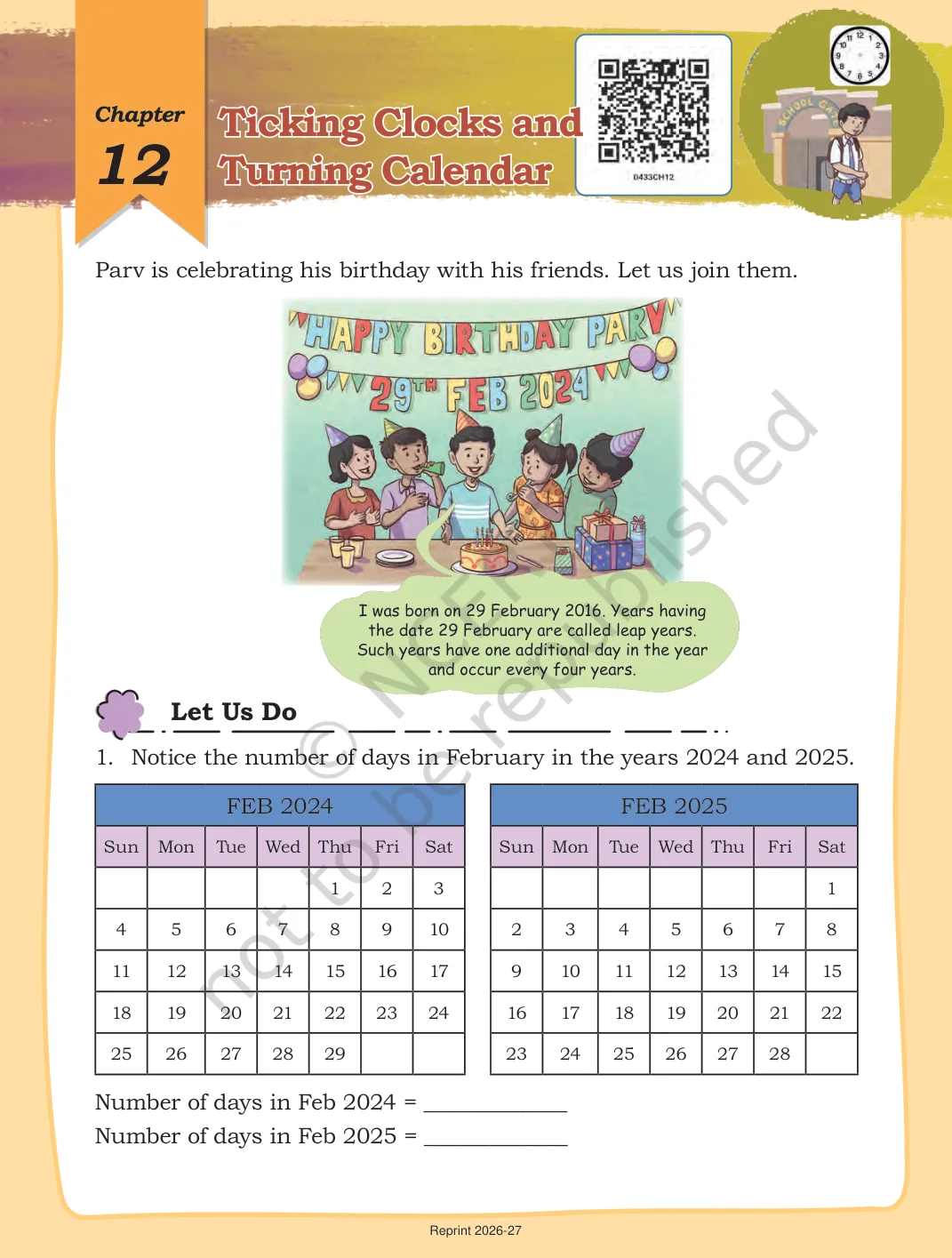
Class 4 Maths Chapter 12, Ticking Clocks and Turning Calendar, celebrates Parv’s leap-year birthday (29 February) to teach leap years, calendar intervals, reading hours and minutes, AM/PM notation, and the 24-hour digital railway/airport clock.
Turning Calendar – Leap Years & Counting Days compares February calendars in leap years (29 days, 366 days in the year, occurring every 4 years like 2016, 2020, 2024, 2028) versus ordinary years (28 days, 365 days), and calculates age and festival durations.
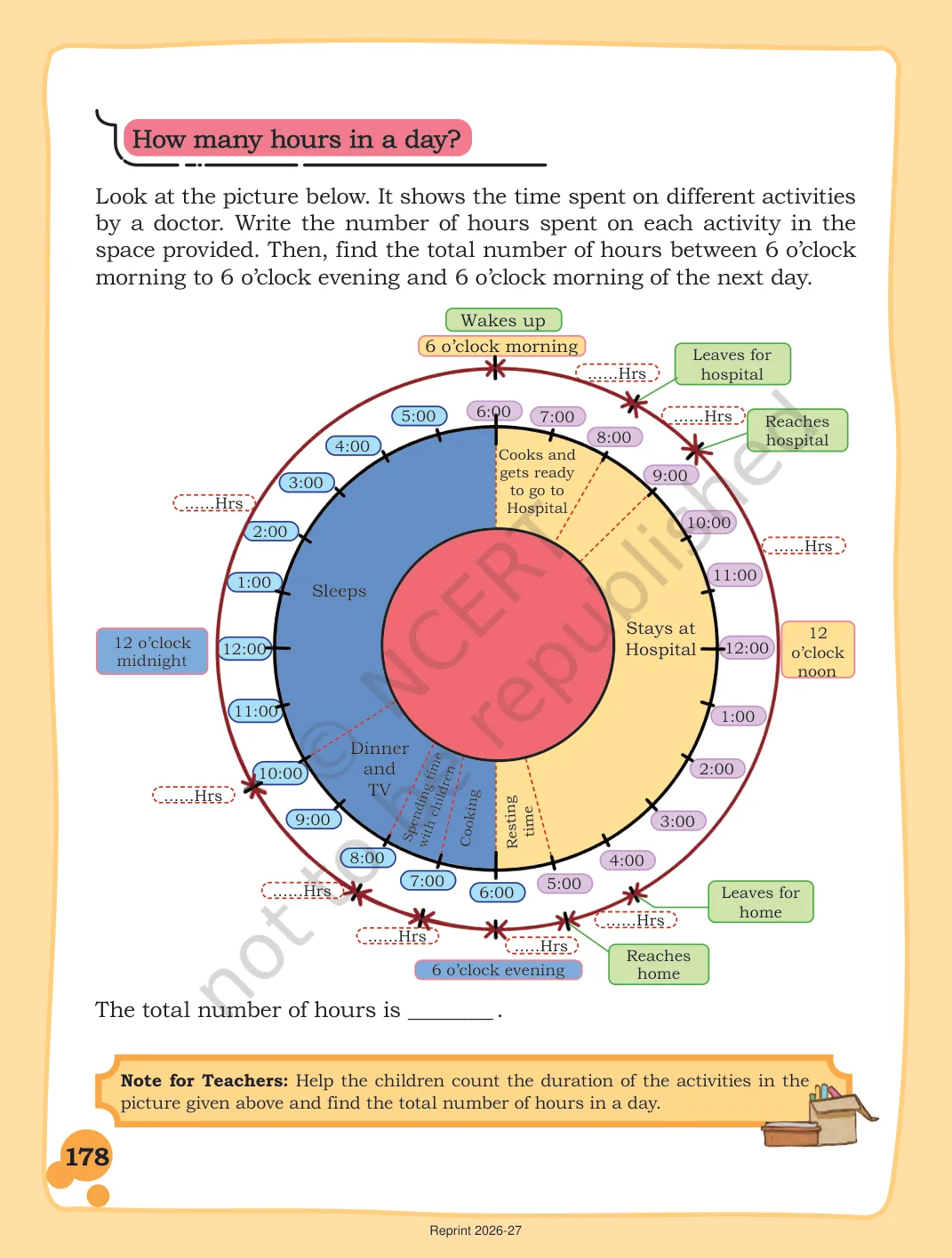
Ticking Clocks – AM/PM, 24-Hour Clock & Elapsed Time reads time to the exact minute, distinguishes AM (midnight 12:00 to noon 12:00) from PM (noon 12:00 to midnight 12:00), converts to 24-hour clock time (e.g., 1:00 PM = 13:00 hours, 8:00 PM = 20:00 hours), and finds time durations.
Solved Chapter Exercises & Activities
- Let Us Do, Let Us Try, and Let Us Solve textbook exercises.
- Hands-on straw/grid models, dot-paper drawing, and number games.
Frequently Asked Questions (FAQs)
Q: What is a leap year and how many days does February have in a leap year?
Ans: A leap year occurs once every 4 years and has 366 days instead of 365, with the extra day added to February as 29 February.
Q: How do you convert PM time into the 24-hour clock?
Ans: For times from 1:00 PM to 11:59 PM, add 12 to the hour (for example, 1:00 PM becomes 13:00 hours, 5:20 PM becomes 17:20 hours, and 11:45 PM becomes 23:45 hours).