Ancient Indian History by Romila Thapar: National Council of Educational Research and Training publishes Ancient India by Romila Thapar for Class 6 under the guidance of CBSE. Students who are clear with the content that is present in Ancient Indian History Old NCERT Books can easily secure good marks in the examination. In this page we are providing Old NCERT Ancient Indian History by Romila Thapar Book for free. Ancient India by Romila Thapar PDF can be downloaded without any trouble and Clickbait.
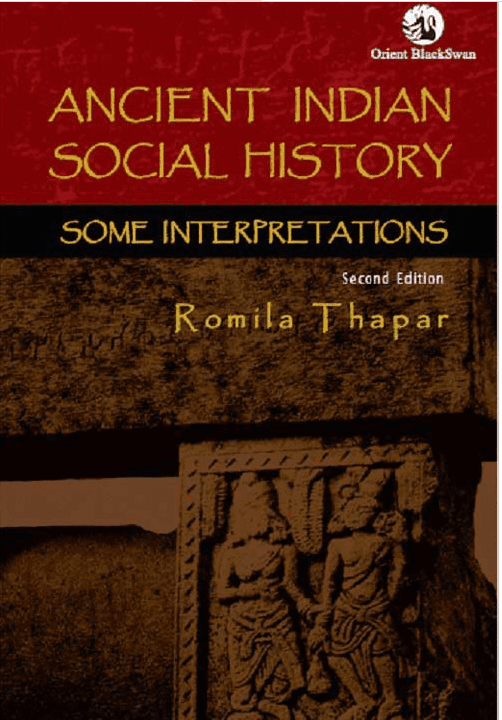
Ancient Indian History by Romila Thapar PDF Download
Old NCERT Ancient Indian History Book is provided in PDF form so that students can access it at anytime anywhere. Ancient Indian History Book created by the best professor Romila Thapar who is expert in History and have good knowledge in the subject History. Class 6 Ancient Indian History Books are available in both English as well as Hindi Medium. Check the below links, click and download them for further use.
Based on the document, here is a table of contents for the main concepts:ANCIENT INDIAA TEXTBOOK OF HISTORY FOR MIDDLE SCHOOLS
Introduction
- The Study of Indian History
- Learning about the past from evidence (written records, manuscripts, inscriptions, archaeological remains: pottery, tools, weapons, coins, buildings)
- Archaeology and its findings
- Transition from “food-gatherer” to “food-producer”
Chapter One: Early Man
- A. MAN AS A NOMAD
- Life as a nomad (food and shelter)
- Discovery and use of fire
- Tools and Weapons (Stone Age: Early, Middle, Late)
- Clothes
- B. BEGINNINGS OF SETTLED LIFE
- Discovery of agriculture (end of nomadic life)
- The Taming of Animals
- Discovery of Metals (Stone Age, Copper or Bronze Age/Chalcolithic Age)
- The Wheel
- The Early Villages (huts, food, pottery)
- Dress and Ornaments
- Society (division of work, leadership)
- Religion (worship of sky-god, earth-goddess, burial)
Chapter Two: Man Takes to City Life
- A. THE CITIES
- Growth of towns and civilization (technology, writing, laws)
- Indus Valley Civilization/Harappa culture (Mohenjo-daro, Harappa, Rupar, Lothal, Kalibangan)
- Extent of the culture
- Contemporary civilizations (Nile, Euphrates, Tigris, Hwang-Ho)
- The Environment (climate, animals, timber)
- The Cities and their Buildings (citadel, granaries, Great Bath, factories)
- The Houses (planning, materials, drainage)
- B. THE LIFE OF THE PEOPLE
- Food
- Clothes and Ornaments
- Amusements and Toys
- Occupations (spinning, weaving, pottery, metal-work, seals, script/pictographs)
- Trade (contacts with Sumer, weights and measures)
- Religion (mother-goddess, male-god, pipal tree, burial)
- The Fall of the Harappans (floods, disease, climate change, attacks by Aryans)
Chapter Three: Life in the Vedic Age
- A. THE ARYAN SETTLEMENTS
- Origin and settlement of Indo-Aryans (Punjab, Ganga valley)
- Discovery of iron
- Source of knowledge (literary evidence: Vedas, Epics-Ramayana, Mahabharata; archaeological finds)
- The King and his Officers (tribes, hereditary kingship, senani, purohita, gramanis, samiti, sabha)
- The Village (gramas, vish, jana, patriarchal family)
- Occupations (agriculture, animal husbandry, crafts)
- The Aryan and his Horse (chariots, chariot racing)
- B. LIFE OF THE PEOPLE
- The Aryans and the Dasyus/Dasas (conflict, slavery, marriage restrictions)
- Society (division into four classes/castes: kshatriyas, brahmans, vaishyas, shudras)
- Occupations (metal-work/iron, carpentry, weaving, spinning, teaching, medicine)
- Dress and Ornaments
- Amusements (chariot racing, dancing, music, gambling)
- Food and Drink (milk, ghee, meat, sura, madhu, soma)
- Religion (worship of nature gods: Dyauspitar, Indra, Surya, Agni, Usha)
- Religious sacrifices and the importance of priests
- Philosophers and the Upanishads (rishis)
Chapter Four: Rise of the Kingdom of Magadha
- A. KINGDOMS AND REPUBLICS
- Settlement in Ganga valley (Panchala, Surasena, Kosala, Kashi, Videha, Magadha)
- Republics (Shakyas, Lichchhavis)
- Kingdoms (Kosala, Magadha, Vatsa, Avanti)
- The Kingdom of Magadha (iron ore deposits, control of Ganga river trade)
- Bimbisara (conquest of Anga, river-port Champa, council of advisers, friendly relations/ambassadors, capital Rajagriha)
- Ajatashatru (murder of father, conquest of Kosala and Vrijjis)
- The Position of the King (protector of dharma, god-like status, administrative officers)
- B. LIFE OF THE PEOPLE
- Importance of Taxes (one-sixth produce, collection in kind, tax-collectors)
- The Village (headman as link)
- The Town (growth, examples: Ujjayini, Pratisthana, Bhrigukachchha, Tamralipti, Shravasti, Champa, Rajagriha, Ayodhya, Kaushambi; structure: wood and bricks)
- Trade (barter, invention of money/crude coins, trade routes: Takshashila, Broach)
- Society (artisans/merchants organize into shrenis/guilds, caste system/jati, four classes/lowly castes)
- Ashramas/Stages of Life (brahmacharin, grihastha, vanaprastha, sannyasin)
- C. BUDDHISM AND JAINISM
- Dissatisfaction with Vedic religion (rites and sacrifices)
- Jainism (Mahavira, Three Jewels: Right Faith, Right Knowledge, Right Action, ahimsa, use of common language)
- Buddhism (Gautama the Buddha/Prince Siddhartha, Lumbini/Kapilavastu, suffering due to desire, Eightfold Path, ahimsa, opposition to caste system)
- Monasteries (viharas) and schools
- Popularity and spread of Buddhism (support from craftsmen, traders, peasants, untouchables, centres of education, influence on art/sculpture, spread to Asia)
Chapter Five: The Mauryan Empire
- A. THE MAURYA KINGS
- Nanda kings of Magadha (wealth, unpopularity)
- Chandragupta Maurya (Chanakya/Kautilya, overthrow of Nandas)
- Alexander’s invasion (326 B.C.) and Greek governors
- Conquests of Chandragupta Maurya (Punjab, Seleucus Nicator, marriage alliance, Central India)
- Bindusara (Jaina asceticism of Chandragupta, conquest of Deccan Plateau)
- Ashoka (Kalinga war/260 B.C., decision to stop war, empire extent)
- Ashoka’s Edicts (engraved on rocks/pillars, Brahmi script/Prakrit language)
- Ashoka’s Dhamma (peace, tolerance, obedience to elders/parents, kindness to slaves/servants, forbidding animal sacrifice and meat-eating)
- B. ADMINISTRATION, SOCIETY AND CULTURE
- Mauryan Art (sandstone pillars, polished, animal figures: Sarnath lion capital as national emblem)
- Ashoka’s Administration (king as father, public works: roads, shady trees, wells, rest-houses, hospitals)
- Pataliputra (capital, council of ministers)
- Division of Empire (provinces/viceroys, districts/groups of villages, officers: tax-collectors, judges, record keepers)
- Dharma-mahamatras (special officers for moral conduct)
- City administration (council and six boards)
- Relations with Neighbouring Countries (missions to Greek kings/western Asia, Mahendra to Ceylon)
- Kautilya and Megasthenes (Arthashastra, Indica-description of Pataliputra, king, army)
- Society (farmers, herdsmen, craftsmen, soldiers, respected brahmans/monks)
- The End of the Mauryan Empire (weak rulers, vast distances, high expenses, Pushyamitra Shunga in 185 B.C.)
Chapter Six: India after the Mauryas
- A. THE DECCAN
- Dakshinapatha/Deccan (non-Aryan origin, independence after Mauryan decline)
- The Satavahanas/Andhras (Satakarni – “Lord of the West,” conflict with Shakas)
- Gautamiputra Satakarni (revival of power)
- Vasishthiputra (marriage alliance with Shaka ruler)
- Decline in 3rd century A.D.
- Importance (bridge between North/South, development of villages/roads, trade/towns: Nasik, Godavari delta, ports: Broach, Burma, Malaya)
- Administration (provinces/governors, village headman/revenue collection)
- Buddhist Monuments (donations by merchants, stupas – Sanchi, Amaravati, viharas/monasteries – Taxila, Sarnath, rock-cut caves – Karle, Bedsa)
- Religion (popularity of Buddhism, philosophers: Ashvaghosha, Nagarjuna, rise of cults of Vishnu and Shiva, devotion/bhakti over ceremony)
- B. SOUTH INDIA
- The Cholas, Pandyas and Cheras (Tamilnad, conflicts, Chola occupation of Ceylon)
- Shangam Literature (assemblies at Madurai, collection of poems in Tamil, description of life)
- The Roman Trade (demand for Indian luxury goods: spices, textiles, precious stones, animals; payment in gold)
- Roman presence (Arikamedu near Pondicherry)
- Trade with South-east Asia and China
- Life of the People (villages/towns/ports, king/brahman advisers, sabha, taxes, amusements)
- Religion (influence of northern religions, worship of Murugan/Kartikeya/Skanda, hero worship, sea-god)
- Christianity (arrival in 1st century A.D., Jesus Christ, single God, spread on Malabar/Madras coasts, dating system: B.C./A.D./Anno Domini)
- C. NORTH INDIA
- Foreigners (Bactrian Greeks, Parthians, Shakas, Kushanas)
- The Indo-Greeks (rulers in Gandhara-Punjab/Kabul valley, coins, mixture of Indian/Greek culture, King Menander)
- The Shakas (western India-Sind/Saurashtra/Kathiawar/Malwa, Rudradaman)
- The Kushanas (Chinese Turkistan, Taxila, Peshawar, Mathura, satrapies/provinces)
- Kanishka (strong king, Central Asia campaigns, supporter of Buddhism, Fourth Buddhist Council, statue at Mathura)
- Exchange of Ideas (contact with Iran/western Asia, increased trade)
- Art (Greek influence/Gandhara art in statues of Buddha and Bodhisattvas, Mathura school of art)
- Religion (Mahayana and Hinayana sects of Buddhism, missionaries to China/Central Asia)
- Science (astronomy/Greek knowledge, medicine-Sushruta, Charaka, surgery)
Chapter Seven: The Age of the Guptas
- A. THE GUPTA KINGS
- Gupta dynasty in Magadha (4th century A.D. for 200 years)
- “Golden Age” (patrons of learning, arts, sciences)
- Chandragupta I (marriage to Lichchhavi princess, rule over Saketa/Prayaga/Magadha, beginning of Gupta era 320 A.D.)
- Samudragupta (Allahabad pillar inscription, military campaigns across India, smaller empire than Mauryan, poet/musician-playing veena)
- Chandragupta II/Vikramaditya (campaigns against Shakas, marriage alliances with Vakataka kingdom, patronage of learning and arts)
- Hunas (Central Asian nomads, attacks in 5th century A.D., weakened Guptas, settled in India)
- Gupta Administration (more independent governors, district councils with citizens, salaries in cash initially, later land grants/revenue, eventual rise of independent provincial rulers)
- B. LIFE OF THE PEOPLE
- Society (Fa Hien’s account-Chinese traveller-Buddhism/Brahmanism peace, prosperity, law-abiding, castes, bad treatment of untouchables)
- Trade (growth with western Asia, south-east Asia, improved sea-faring/shipbuilding)
- Ports (Tamralipti/Tamluk on east coast; Broach, Sopara, Kalyan on west coast)
- Spread of Indian Culture (Buddhism, Hinduism, Sanskrit, art to south-east Asia)
- Trade routes (overland to central Asia/China, sea-trade with Africa/Arabia/Iran/Mediterranean)
- Religion (Hinduism/worship of Shiva and Vishnu becomes powerful, Gupta kings as Vaishnavas, ashvamedha sacrifice, devotion over ritual, avatar/incarnation)
- Literature (Ramayana, Mahabharata, Puranas rewritten)
- Architecture (temples: brick/stone construction-Sanchi, Deogarh-images of gods; rock-cut caves: Ajanta/Ellora, murals/paintings)
- Literature (Kalidasa-poet/dramatist-Abhijnana Shakuntala, Meghaduta, Raghuvamsha; Panchatantra fables; widespread use of Sanskrit)
- Science (astronomy/mathematics: Aryabhata-earth moves around sun, decimal system/zero; knowledge of metals-Iron Pillar at Mehrauli; medicine/grammar/lexicography)
Chapter Eight: The Age of Smaller Kingdoms
- A. THE NORTH
- Disunity (500-800 A.D.)
- Harsha/Harshavardhana (7th century A.D., capital Thanesar, moved to Kanauj)
- Conquests (Punjab, eastern Rajasthan, Ganga valley up to Assam)
- Defeat by Pulakeshin (Chalukya king of Vatapi/Badami) when attempting Deccan campaign
- Nature of Kingdom (tribute, autonomy of conquered kings)
- Religion (patronage of Buddhism and others, author of three plays in Sanskrit)
- Hiuen Tsang (Chinese Buddhist pilgrim, Nalanda university, caste system/untouchables, honesty of people, mild punishments)
- Breakup of Harsha’s kingdom after his death
- B. THE DECCAN AND THE SOUTH
- The Chalukyas (after Vakatakas, centre at Vatapi/Badami, Pulakeshin)
- Enemies (Rashtrakutas to the north, Pallavas to the south)
- Conflict with Pallavas (defeat of Mahendravarman, Pulakeshin defeated by Narasimhavarman)
- Trade (connections with Iran, Arabia, Red Sea, south-east Asia)
- Zoroastrianism (Zoroaster, Parsis in Deccan)
- Patronage of Art (temples, cave shrines, Ellora sculpture-Chalukya and Rashtrakuta)
- The Pallavas (officers of Satavahanas, capital Kanchipuram, wars with Pandyas/Chalukyas)
- Mahendravarman (contemporary of Harsha/Pulakeshin, poet/musician, conversion from Jaina to Shaivism by Appar)
- The Tamil Saints/Bhakti (personal devotion to Vishnu or Shiva)
- Alvars (devotees of Vishnu), Nayanmars (devotees of Shiva)
- Literature (hymns in Tamil, Dandin wrote in Sanskrit)
- Architecture (rock-cut ratha temples-Mahabalipuram, stone block temples-Kanchipuram, tall towers)
- The Temple as a Community Centre (discussion, education, festivals)
Chapter Nine: India and the World
- A. INDIAN CONTACTS WITH THE OUTSIDE WORLD
- Trade with South-east Asia (spices, Indian merchants settle, Kaundinya legend in Cambodia)
- Adoption of Indian Culture (court circles, Sanskrit, stories of epics/Puranas, Ramayana in Java, local traditions combined)
- Influence of Indian Religions (Hinduism declined, Buddhism popular)
- Temples (Angkor Vat-Cambodia, Bayon-Cambodia, Borobodur-Java, Thailand, Burma)
- Communication with China and Tibet (ambassadors, Buddhism)
- Trade Routes (Old Silk Route through Central Asia, markets of western Asia and East Africa)
- B. THE ARABS IN INDIA
- Rise of Islam (7th century A.D., Prophet Muhammad, Mecca/Medina)
- Muhammad’s Teachings (one God-Allah, Prophet of Allah, five prayers-namaz, fasts, pilgrimage to Mecca, charity, equality/no caste)
- Hijra Era (622 A.D.)
- The Spread of Islam (Caliphate: western Asia to Spain)
- The Arabs in India (conquest of Sind 712 A.D., trading settlements on west coast, spread of Islam)
Conclusion
- India’s flourishing civilization (8th century A.D.)
- Cultural exchange (exporting and importing culture, Arabs introducing new influences)
- End of the ancient period and commencement of the medieval age.
Important Dates
Important Personalities
Glossary and Vocabulary
| Books | Ancient Indian History |
| Ancient Indian History by Romila Thapar PDF Download | Buy Now |
Ancient Indian History Book covers all the important topics and concepts that are prescribed in NCERT Curriculum and UPSC Exam Syllabus. All the topics and concepts are explained in easily understandable language. Old NCERT Ancient History Books Helps to build strong foundation on all the concepts. Most of the questions asked in the competitive exams are completely from the Old NCERT Ancient Indian History Books.
Thanks for the guidance