📖 Official CG SCERT Class 10 English Reader अध्याय 3 पाठ्यपुस्तक पृष्ठ
LESSON SUMMARY
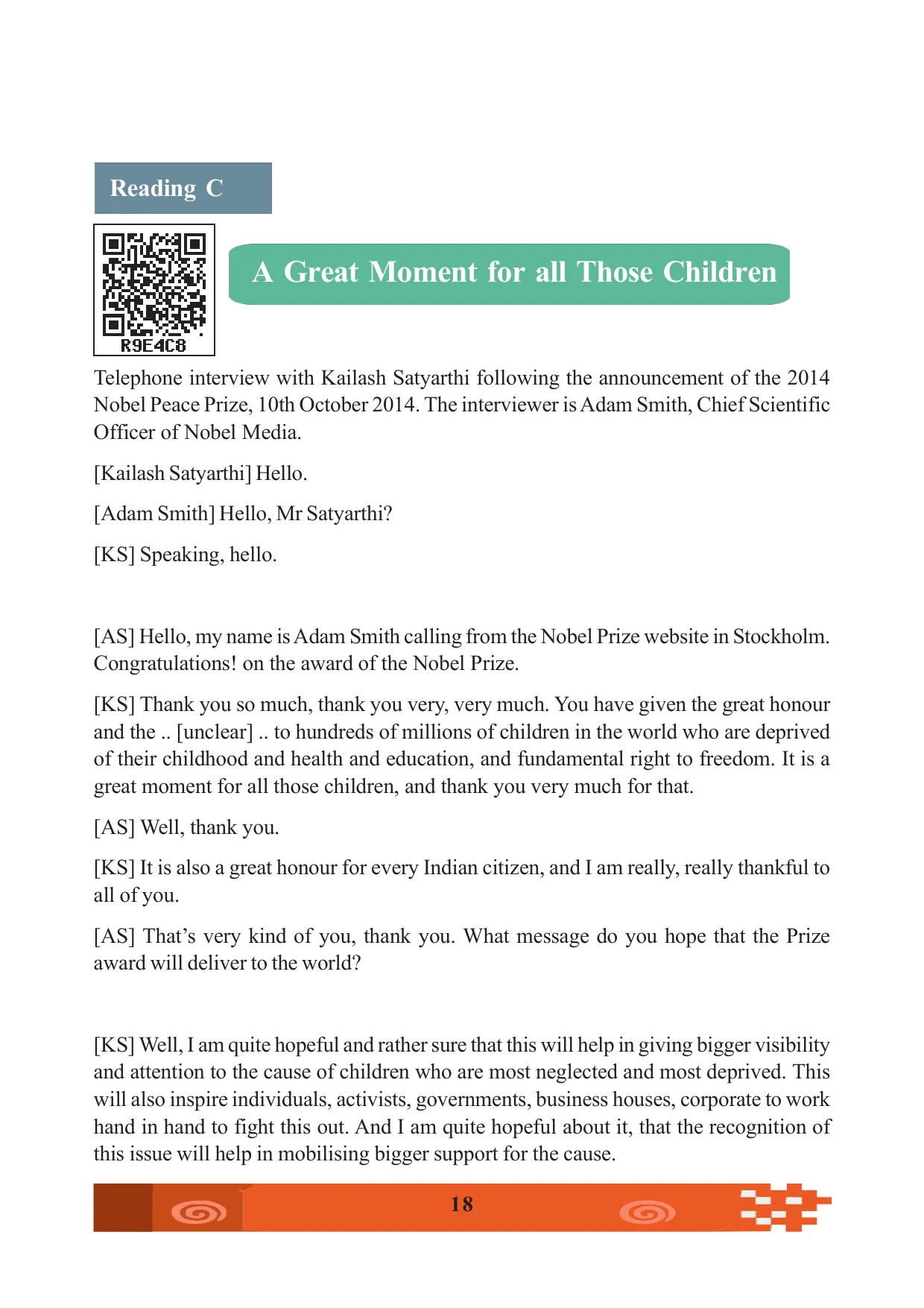
Reading C: A Great Moment For All Those Children – Overview
Background: This lesson is a telephone interview between Adam Smith, Chief Scientific Officer of Nobel Media, and Indian child rights activist Kailash Satyarthi immediately after the announcement of the 2014 Nobel Peace Prize (which he shared with Malala Yousafzai). Core Message: Kailash Satyarthi dedicated his prestigious honor not to himself, but to millions of voiceless, deprived, and enslaved children across the world. He emphasized that child slavery is an intolerable blot on humanity that must be eradicated in our lifetime. He called upon governments, businesses, civil society, and youth to join hands in ending child exploitation and ensuring freedom and education for every child.
📝 Official CG SCERT Class 10 English Reader अध्याय 3 Exercise & Question Page
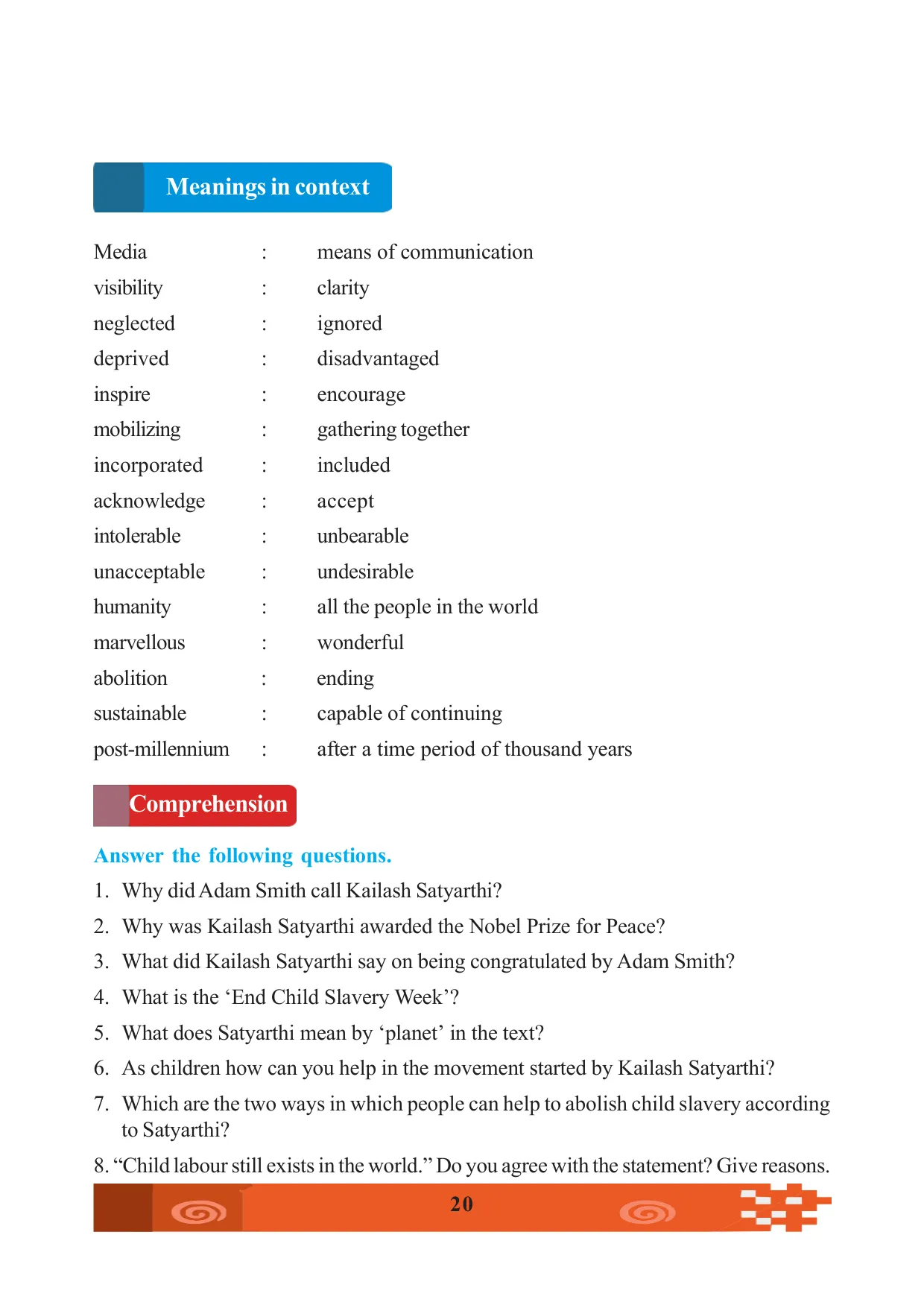
GLOSSARY
Meanings in Context
Term
Contextual Meaning
Visibility
Public attention, clarity, and global awareness.
Deprived
Suffering a severe lack of basic material and cultural benefits.
Mobilizing
Organizing and bringing people together for collective action.
Intolerable
Completely unbearable; unacceptable to human conscience.
Abolition
The official and complete ending of a system, practice, or institution.
Sustainable
Capable of being maintained continuously at a steady level.
EXERCISE
Comprehension: Answer the Following Questions
1. Why did Adam Smith call Kailash Satyarthi?
Answer: Adam Smith, Chief Scientific Officer of Nobelprize.org, called Kailash Satyarthi to record an official telephonic interview and congratulate him immediately upon receiving the 2014 Nobel Peace Prize.
2. Why was Kailash Satyarthi awarded the Nobel Prize for Peace?
Answer: Kailash Satyarthi was awarded the Nobel Peace Prize for his relentless struggle against the suppression of children and young people, and for fighting for the right of all children to education and freedom from child labour.
3. What did Kailash Satyarthi say on being congratulated by Adam Smith?
Answer: Satyarthi expressed gratitude and stated that the award was a great honor for all children suffering under exploitation and child slavery. He dedicated the recognition to millions of children whose voices had previously gone unheard.
4. What is the ‘End Child Slavery Week’?
Answer: ‘End Child Slavery Week’ is a global campaign organized to mobilize public awareness, governments, civil society, and businesses to completely eliminate child trafficking, forced labour, and child slavery across the globe.
5. What does Satyarthi mean by ‘planet’ in the text?
Answer: By ‘planet’, Satyarthi refers to the entire global human community, emphasizing that child slavery is not an isolated issue of one country, but an intolerable crime against all humanity that everyone on Earth must unite to solve.
6. As children how can you help in the movement started by Kailash Satyarthi?
Answer: As children, we can help by:
Refusing to buy products or goods made using child labour.
Spreading awareness in our schools and neighbourhoods about children’s right to education.
Reporting instances of child labour in restaurants, brick kilns, or domestic settings to responsible adults or helplines (like Childline 1098).
7. Which are the two ways in which people can help to abolish child slavery according to Satyarthi?
Answer: According to Satyarthi, people can help by:
Mobilizing collective voice and creating intense moral and political pressure on governments and international bodies.
Demanding corporate responsibility and ensuring that businesses and consumers reject any supply chain tainted by child exploitation.
8. “Child labour still exists in the world.” Do you agree with the statement? Give reasons.
Answer: Yes, I strongly agree. Despite strict legislation, millions of impoverished children worldwide are still forced into hazardous manual labour, domestic servitude, agriculture, and unregulated workshops due to poverty, lack of educational facilities, and socio-economic inequality.