CG Board Class 11 Political Science Solutions | NCERT Class 11 Political Science (Constitution at Work & Political Theory) (2026-27)
Complete solutions for CG Board Class 11 Political Science Chapter 16: Citizenship strictly following the prescribed NCERT Class 11 Political Science (Constitution at Work & Political Theory) syllabus.
📖 Textbook Pages (NCERT / CG Board 2026-27)

✍️ Chapter 16 Exercise Solutions: Citizenship
Exercises
1. Citizenship as full and equal membership of a political community involves both rights and obligations. Which rights could citizens expect to enjoy in most democratic state today? What kind of obligation will they have to their state and fellow citizens?
Rights: Civil rights (freedom of speech, equality before law, protection of life), political rights (right to vote, contest elections), and socio-economic rights (minimum wage, education, healthcare).
Obligations: Obeying the Constitution and laws, paying taxes honestly, respecting the rights and diversity of fellow citizens, protecting public property and the environment, and participating responsibly in democratic life.
2. All citizens may be granted equal rights but all may not be able to equally exercise them. Explain.
3. Write a short note on any two struggles for full enjoyment of citizen rights which have taken place in India in recent years. Which rights were being claimed in each case?
- Struggle for the Right to Information (MKSS movement in Rajasthan): Villagers and workers demanded access to official muster rolls and expenditure records to expose wage theft and corruption in public works. This led to the Right to Information Act (2005), claiming the right to transparency and accountability.
- Struggles of Street Vendors and Slum Dwellers: Urban poor and hawkers’ associations petitioned courts and local bodies against arbitrary evictions, claiming the Right to Livelihood and Right to Shelter under Article 21.
4. What are some of the problems faced by refugees? In what ways could the concept of global citizenship benefit them?
Problems faced by refugees: Statelessness, lack of legal identity and voting rights, inability to work legally or own property, restricted access to healthcare and schooling, and constant threat of detention or deportation.
Benefits of global citizenship: Global citizenship emphasises shared human responsibility across national borders. It encourages international cooperation, fair burden-sharing among nations, humane asylum standards, and protection of basic human rights for displaced people regardless of their passport.
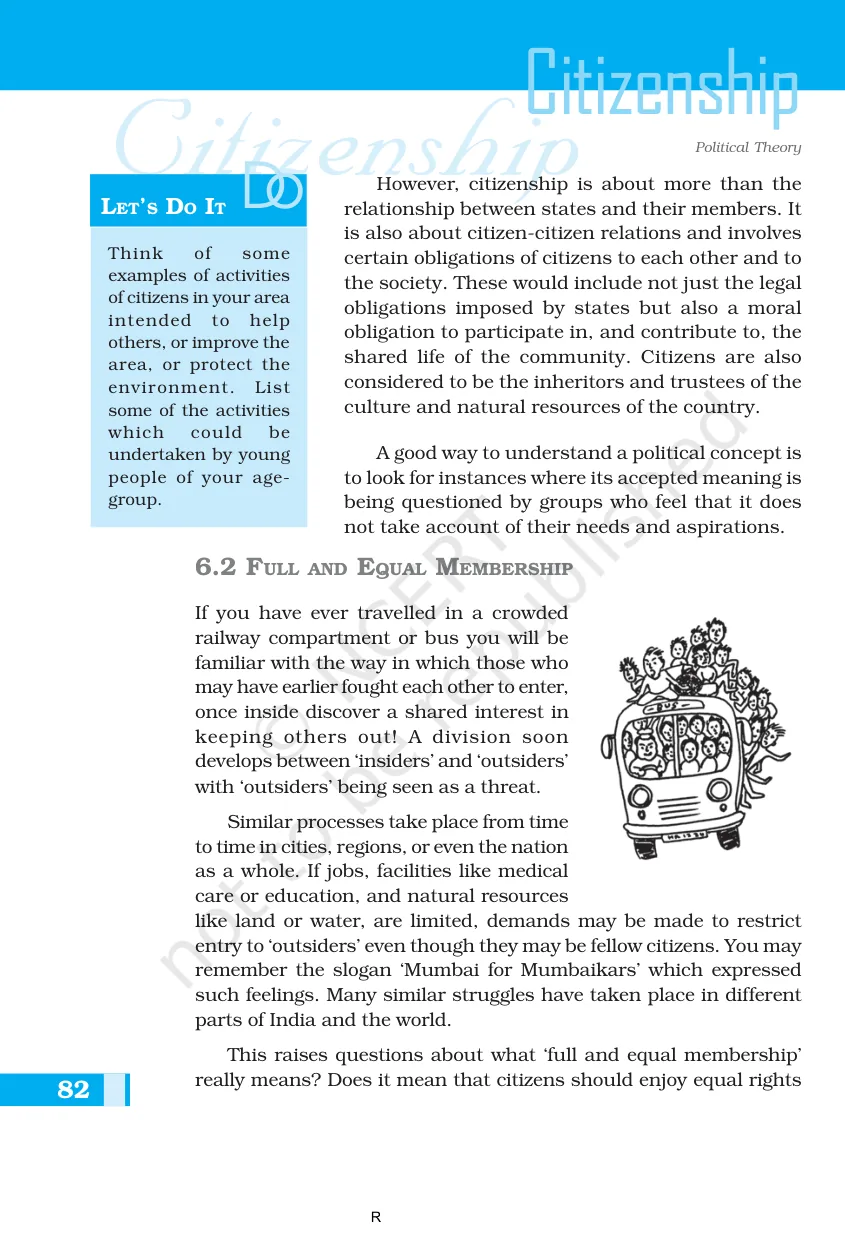
5. Migration of people to different regions within the country is often resisted by the local inhabitants. What are some of the contributions that the migrants could make to the local economy?
6. ‘Democratic citizenship is a project rather than an accomplished fact even in countries like India which grant equal citizenship’. Discuss some of the issues regarding citizenship being raised in India today.
Answer: Although the Constitution grants equal citizenship to all, achieving full and equal citizenship remains an ongoing project. Key issues today include: ensuring basic housing, sanitation, and ration access for internal migrant workers and slum dwellers; addressing caste and gender violence; protecting tribal land rights; and resolving debates over documentation and citizenship verification fairly and inclusively.