CG SCERT / Chhattisgarh Board Class 5 Mathematics Solutions | 2026-27 Official Edition
📚 Lesson Overview:
- Board: Chhattisgarh Board of Secondary Education (CGBSE) / CG SCERT Raipur
- Textbook: गणित-5 (Class 5 NEP Official Edition)
- Chapter 2: Fractions
- Medium: English Medium & हिंदी माध्यम
- Coverage: Concept Summary, Solved In-Text Activities, Exercises & FAQs
Welcome to the complete, 100% textbook-grounded CG Board Class 5 Maths Chapter 2 Solutions: Fractions. Prepared strictly according to the new 2026-27 SCERT Chhattisgarh Raipur curriculum, this guide helps Class 5 students master key mathematical ideas with ease and precision.
Chapter Overview & Key Concepts
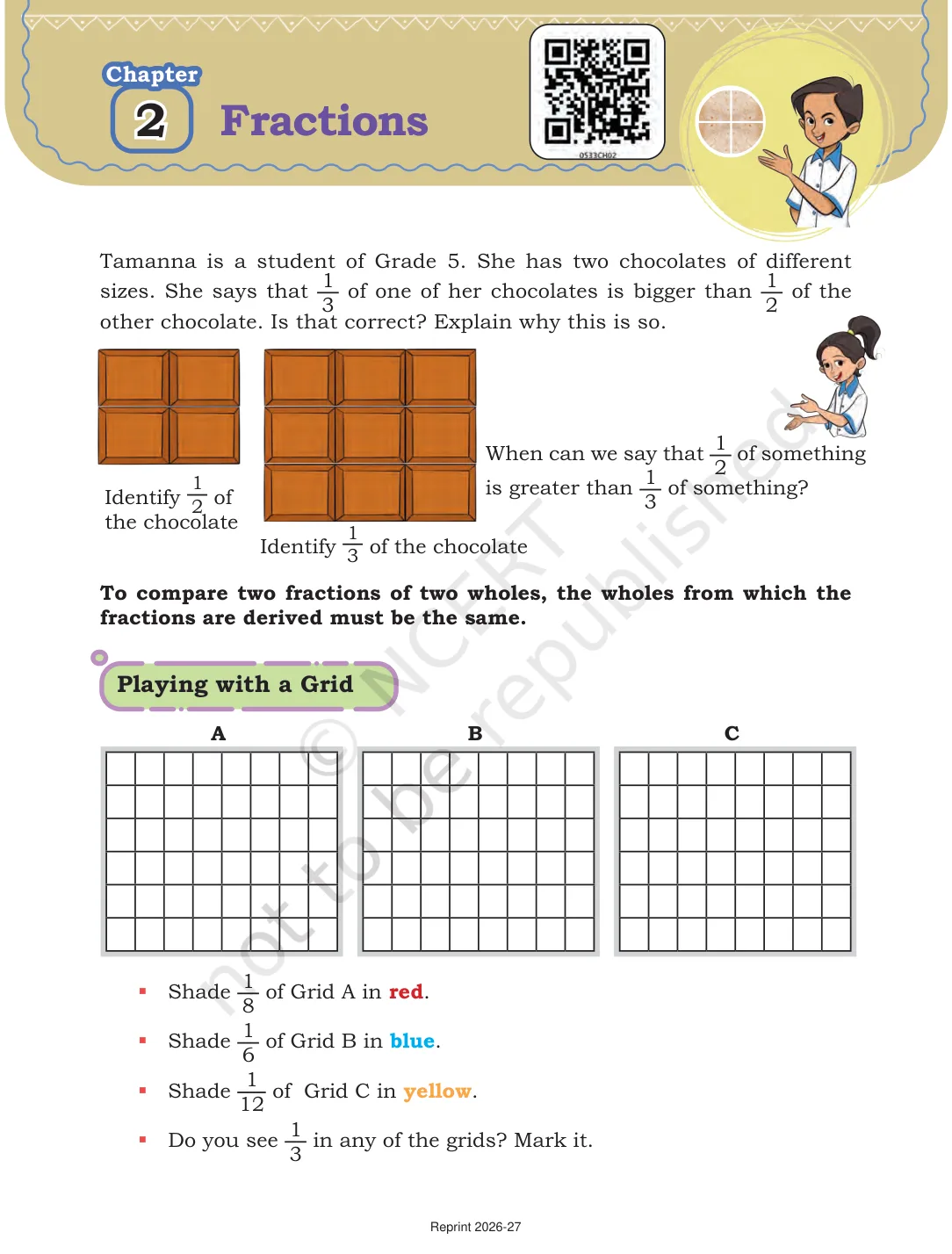
Class 5 Maths Chapter 2, Fractions, uses chocolate bars, coloured grids, circular fraction kits and parathas to build a clear understanding of equivalent fractions, comparing fractions with like/unlike numerators and denominators, and fractions greater than 1 (mixed fractions).
Playing with Grids, Fraction Kit & Equivalent Fractions shades 1/8, 1/6, 1/12 and 1/3 on grids, combines unit fraction pieces from the textbook’s cut-out Fraction Kit to form a whole, and generates equivalent fractions.
Comparing Fractions & Fractions Greater Than 1 compares fractions having the same denominator, same numerator, or by benchmark comparison with 1/2 and 1, and converts improper fractions (like 7/2 or 9/4) into wholes and parts.
Solved Chapter Exercises & Activities
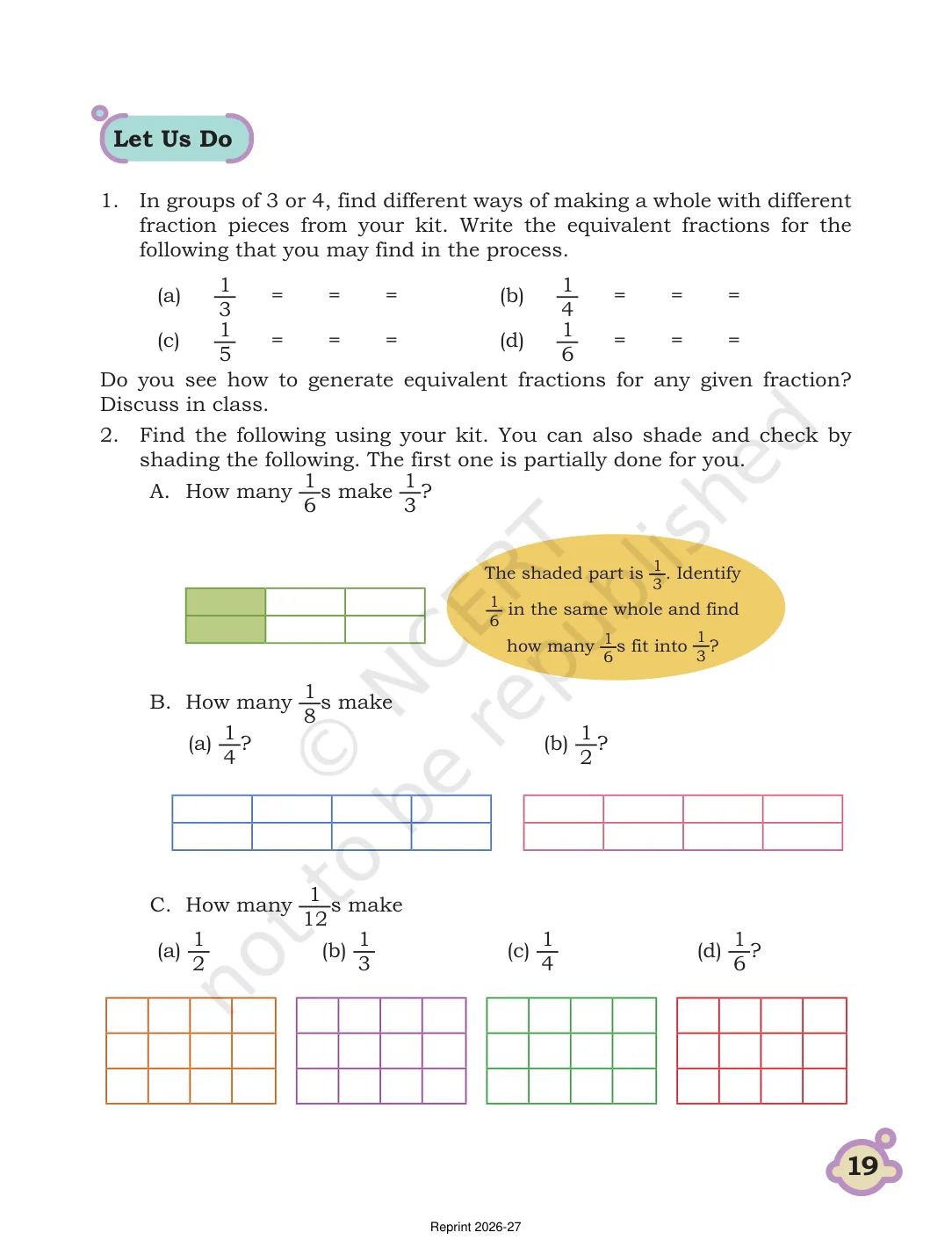
- Let Us Do, Let Us Think, and Let Us Solve practice exercises.
- Interactive number games, visual grids, and hands-on puzzles.
Frequently Asked Questions (FAQs)
Q: When comparing two fractions of two wholes, what condition must be met?
Ans: Both fractions must refer to wholes of the exact same size; otherwise 1/3 of a large chocolate could be bigger than 1/2 of a small chocolate.
Q: Which is greater when two fractions have the same numerator, such as 1/2 and 1/4?
Ans: When two fractions have the same numerator, the fraction with the smaller denominator is greater (1/2 > 1/4) because the whole is divided into fewer, larger equal shares.