CG SCERT (Chhattisgarh Board) Class 6 Science Solutions | 2026-27 Official Edition
Welcome to the complete, authentic, 100% textbook-grounded CG Board Class 6 Science Chapter 1 Solutions: The Wonderful World of Science (विज्ञान का अनूठा संसार) in Bilingual Format (English Medium + हिंदी माध्यम). Every single question from the official textbook exercise section (Let us enhance our learning / आइए अपने अधिगम को बढ़ाएँ) has been meticulously solved strictly according to the new NEP 2020 / SCERT Chhattisgarh textbook Curiosity / जिज्ञासा (pp. 1–8 (PDF pp. 19–26)).
📖 Official SCERT Chhattisgarh Textbook Reference Snapshots (pp. 1–8 (PDF pp. 19–26)):
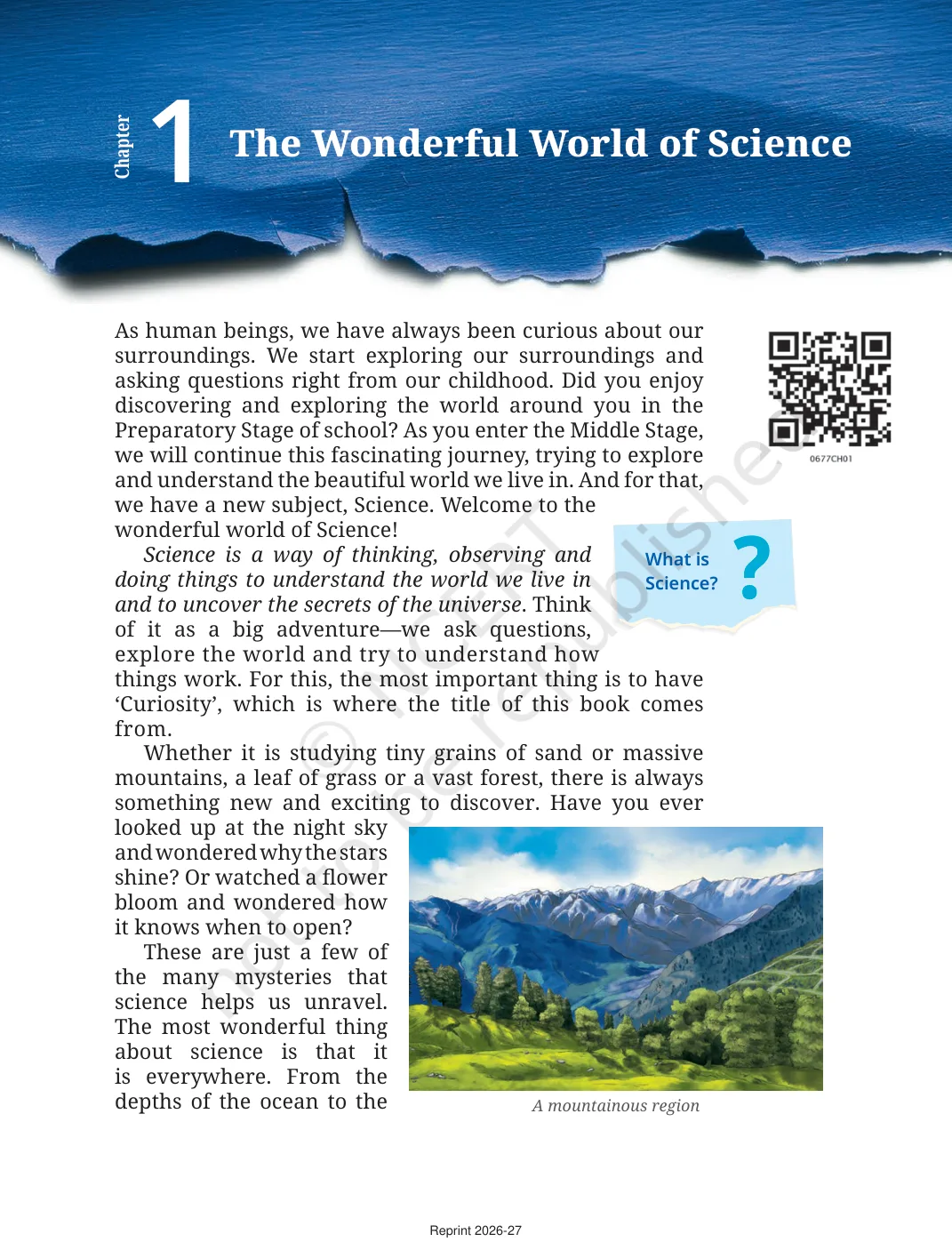
Chapter Opening Page
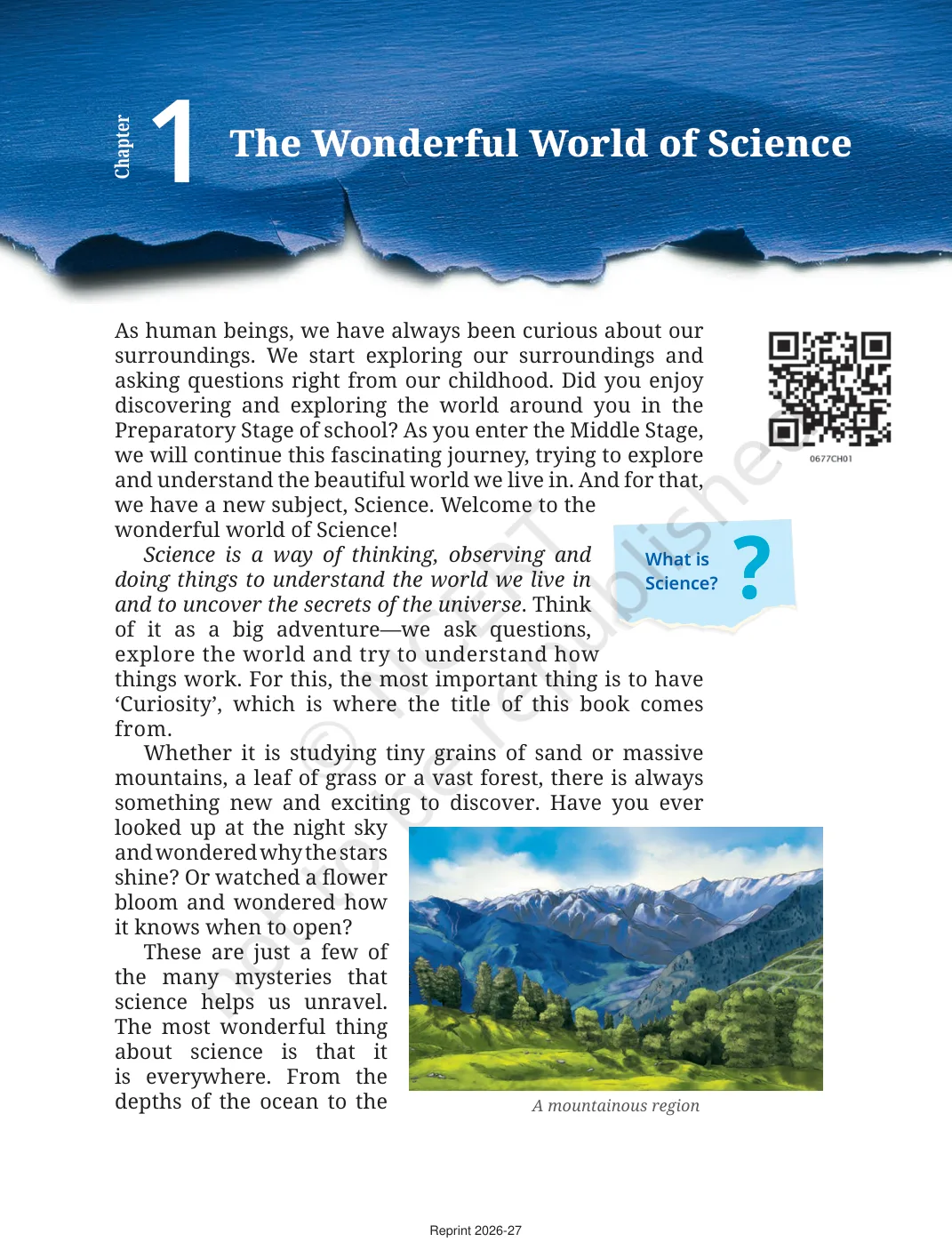
Official Exercise Questions Page
📚 Chapter 1 Summary & Core Scientific Concepts / सारांश एवं प्रमुख अवधारणाएँ
- What is Science?: Science is an organized way of observing, exploring, questioning, and experimenting to understand how things work in the universe.
- The Role of Curiosity: Curiosity is the engine of all scientific breakthroughs. Asking ‘Why is the sky blue?’ or ‘How do ants find food?’ sparks scientific thinking.
- Scientific Method Steps: 1. Observation (अवलोकन) -> 2. Asking Questions (प्रश्न पूछना) -> 3. Formulating Hypotheses / Guessing (अनुमान लगाना) -> 4. Experimentation & Testing (प्रयोग एवं परीक्षण) -> 5. Drawing Conclusions & Revising (निष्कर्ष एवं सुधार).
- Science in Everyday Life: From curdling milk, boiling water, and cooking food to rainbows, plant growth, and mobile phones, science touches every aspect of daily life.
- विज्ञान क्या है?: विज्ञान हमारे चारों ओर की दुनिया और ब्रह्मांड को समझने का एक व्यवस्थित तरीका है, जो अवलोकन, प्रश्न पूछने और प्रयोगों पर आधारित है।
- जिज्ञासा का महत्व: जिज्ञासा विज्ञान की नींव है। ‘आसमान नीला क्यों दिखता है?’ या ‘चींटियाँ रास्ता कैसे खोजती हैं?’ जैसे स्वाभाविक प्रश्न ही महान खोजों को जन्म देते हैं।
- वैज्ञानिक पद्धति के चरण: 1. अवलोकन -> 2. प्रश्न पूछना -> 3. अनुमान या परिकल्पना बनाना -> 4. प्रयोग और परीक्षण करना -> 5. निष्कर्ष निकालना और आवश्यकता पड़ने पर विचार सुधारना।
- दैनिक जीवन में विज्ञान: दूध से दही बनना, पानी का उबलना, इंद्रधनुष का बनना, पौधों की वृद्धि और मोबाइल फोन तक—सब विज्ञान के सिद्धांतों पर चलते हैं।
✍️ Official Textbook Solutions: Let Us Enhance Our Learning (अभ्यास के संपूर्ण प्रश्न-उत्तर)
Each question below is taken verbatim from the SCERT CG Board textbook and answered with complete scientific reasoning, step-by-step procedures, and bilingual clarity.
Q1. What is science? How is science compared to a giant jigsaw puzzle in this chapter?
Science is a systematic and continuous process of observing, questioning, exploring, experimenting, and understanding the natural world.
Why is it compared to a jigsaw puzzle?
In a jigsaw puzzle, each individual piece connects with others to reveal a complete, beautiful picture. Similarly, every scientific observation, discovery, and experiment adds a new piece of knowledge to our understanding of the universe. Even a single question or small observation helps uncover a larger cosmic truth.
प्र. 1. विज्ञान क्या है? इस अध्याय में विज्ञान की तुलना एक विशाल जिग्सॉ पहेली (jigsaw puzzle) से क्यों की गई है?
विज्ञान प्रकृति और हमारे आस-पास के वातावरण को समझने का एक व्यवस्थित एवं निरंतर चलने वाला तरीका है, जो अवलोकन, सवाल पूछने, प्रयोग करने और तर्कसंगत निष्कर्ष निकालने पर आधारित है।
जिग्सॉ पहेली से तुलना का कारण:
जिस प्रकार जिग्सॉ पहेली में एक-एक टुकड़ा जुड़कर एक सुंदर और संपूर्ण चित्र बनाता है, ठीक उसी प्रकार विज्ञान में प्रत्येक नया अवलोकन, प्रयोग और खोज ज्ञान का एक नया टुकड़ा जोड़ती है। प्रत्येक छोटा सवाल हमें प्रकृति की बड़ी सच्चाई समझने में मदद करता है।
Q2. What are the essential steps of the scientific method? Explain with a simple everyday example.
The core steps of the scientific method are:
- Observation: Noticing something interesting or unusual in nature.
- Questioning: Asking ‘Why’ or ‘How’ it happens.
- Formulating a Hypothesis: Proposing a logical, testable guess.
- Experimentation & Data Collection: Performing hands-on tests to verify the guess.
- Conclusion & Revision: Analyzing results to confirm or refine the hypothesis.
Everyday Example (Boiling Milk):
- Observation: Milk rises up and overflows when heated, but plain water does not boil over as quickly.
- Question: Why does boiling milk foam and spill over?
- Hypothesis: A layer of cream/fat forms on top of milk that traps escaping steam bubbles.
- Experiment: Continuously stir the milk while boiling or remove the top cream skin. The steam escapes freely and the milk does not spill over.
- Conclusion: The surface cream layer traps water vapour; stirring prevents the trap and stops spilling.
प्र. 2. वैज्ञानिक पद्धति (Scientific Method) के प्रमुख चरण कौन-कौन से हैं? एक सरल दैनिक उदाहरण देकर समझाइए।
वैज्ञानिक पद्धति के मुख्य चरण निम्नलिखित हैं:
- अवलोकन (Observation): किसी घटना या वस्तु को ध्यानपूर्वक देखना।
- प्रश्न पूछना (Asking Questions): ‘यह कैसे और क्यों हुआ?’ का विचार करना।
- परिकल्पना/अनुमान लगाना (Hypothesis): संभावित तार्किक कारण का अनुमान लगाना।
- प्रयोग एवं परीक्षण (Experimentation): अनुमान की सत्यता जांचने के लिए प्रयोग करना।
- निष्कर्ष (Conclusion): परिणामों के आधार पर सही कारण जानना और ज्ञान को अद्यतन करना।
दैनिक उदाहरण (दूध का उफनना):
- अवलोकन: दूध उबालते समय अचानक ऊपर उठकर बर्तन से बाहर गिर जाता है, जबकि सादा पानी इतनी जल्दी बाहर नहीं गिरता।
- प्रश्न: उबलता दूध बर्तन से बाहर क्यों गिरता है?
- अनुमान: दूध की ऊपरी सतह पर मलाई की परत बन जाती है जो भाप को बाहर निकलने से रोकती है।
- प्रयोग: दूध को उबालते समय चम्मच से लगातार चलाते रहें ताकि मलाई की परत न जमे। हम देखते हैं कि भाप आसानी से निकल जाती है और दूध नहीं उफनता।
- निष्कर्ष: मलाई की परत भाप के बुलबुलों को रोकती है; चम्मच चलाने से भाप मुक्त होती है और दूध गिरने से बच जाता है।
Q3. Why is curiosity considered the driving force behind scientific discoveries?
Curiosity is the natural human desire to learn, know, and understand things that seem mysterious or unexplained.
- Every great discovery in history began with a curious mind asking simple questions. For example, Sir Isaac Newton observed a falling apple and wondered why it fell straight down instead of floating up.
- Curiosity drives us to explore uncharted areas, challenge outdated beliefs, conduct novel experiments, and invent new technologies that improve human lives.
- Without curiosity, humans would take natural phenomena for granted and no scientific progress would take place.
प्र. 3. वैज्ञानिक खोजों के पीछे जिज्ञासा (Curiosity) को मुख्य प्रेरक शक्ति क्यों माना गया है?
जिज्ञासा मनुष्य की वह स्वाभाविक इच्छा है जो उसे अज्ञात को जानने और समझने के लिए प्रेरित करती है।
- इतिहास की प्रत्येक महान खोज की शुरुआत किसी उत्सुक मस्तिष्क के एक सरल प्रश्न से हुई है। उदाहरण के लिए, सर आइजैक न्यूटन ने सेब को गिरते देखकर यह सवाल पूछा कि सेब नीचे ही क्यों गिरा, ऊपर आसमान में क्यों नहीं गया।
- जिज्ञासा ही हमें नए क्षेत्रों की खोज करने, पुराने अंधविश्वासों को चुनौती देने, नए प्रयोग करने और मानव जीवन को सुगम बनाने वाले आविष्कार करने की प्रेरणा देती है।
- यदि मनुष्य में जिज्ञासा न होती, तो वह प्रकृति की घटनाओं को बिना सोचे-समझे स्वीकार कर लेता और कोई वैज्ञानिक प्रगति संभव नहीं हो पाती।
Q4. List four examples of how science is practiced in our homes and kitchens every day.
- Curd Formation: Adding a spoonful of existing curd (inoculum) to lukewarm milk introduces beneficial Lactobacillus bacteria that ferment lactose sugar into lactic acid, turning milk into curd.
- Pressure Cooking: Cooking in a closed pressure cooker increases steam pressure, raising the boiling point of water above 100°C, which cooks food much faster and conserves fuel.
- Baking & Fermentation: Adding yeast or baking powder to dough releases carbon dioxide gas bubbles, causing bread, idli, and dhokla to rise and become soft and spongy.
- Cooling in Earthen Pots (Matka): Water stored in clay pots stays cool during hot summer days due to the continuous evaporation of water through tiny microscopic pores in the clay.
प्र. 4. हमारे घरों और रसोइयों में दैनिक जीवन में विज्ञान के उपयोग के चार उदाहरण दीजिए।
- दूध से दही जमाना: गुनगुने दूध में थोड़ा सा जामन (खट्टा) मिलाने पर लैक्टोबैसिलस जीवाणु दूध की शर्करा को लैक्टिक अम्ल में बदलकर दूध को दही में बदल देते हैं।
- प्रेशर कुकर में खाना पकाना: कुकर के बंद रहने से अंदर भाप का दबाव बढ़ता है, जिससे पानी का क्वथनांक 100°C से ऊपर बढ़ जाता है और भोजन बहुत कम समय में पक जाता है।
- इडली, ढोकला और ब्रेड का फूलना: आटे या घोल में खमीर (यीस्ट) या बेकिंग पाउडर मिलाने से कार्बन डाइऑक्साइड गैस निकलती है, जिससे खाद्य पदार्थ फूलकर स्पंजी और मुलायम हो जाते हैं।
- मिट्टी के घड़े (मटके) में पानी ठंडा होना: मटके की मिट्टी के सूक्ष्म छिद्रों से रिसकर बाहर आने वाले पानी का लगातार वाष्पीकरण होता है, जिससे मटके का पानी स्वाभाविक रूप से ठंडा रहता है।