CG SCERT (Chhattisgarh Board) Class 6 Science Solutions | 2026-27 Official Edition
Welcome to the complete, authentic, 100% textbook-grounded CG Board Class 6 Science Chapter 6 Solutions: Materials Around Us (हमारे आस-पास की सामग्री) in Bilingual Format (English Medium + हिंदी माध्यम). Every single question from the official textbook exercise section (Let us enhance our learning / आइए अपने अधिगम को बढ़ाएँ) has been meticulously solved strictly according to the new NEP 2020 / SCERT Chhattisgarh textbook Curiosity / जिज्ञासा (pp. 101–122 (PDF pp. 119–140)).
📖 Official SCERT Chhattisgarh Textbook Reference Snapshots (pp. 101–122 (PDF pp. 119–140)):
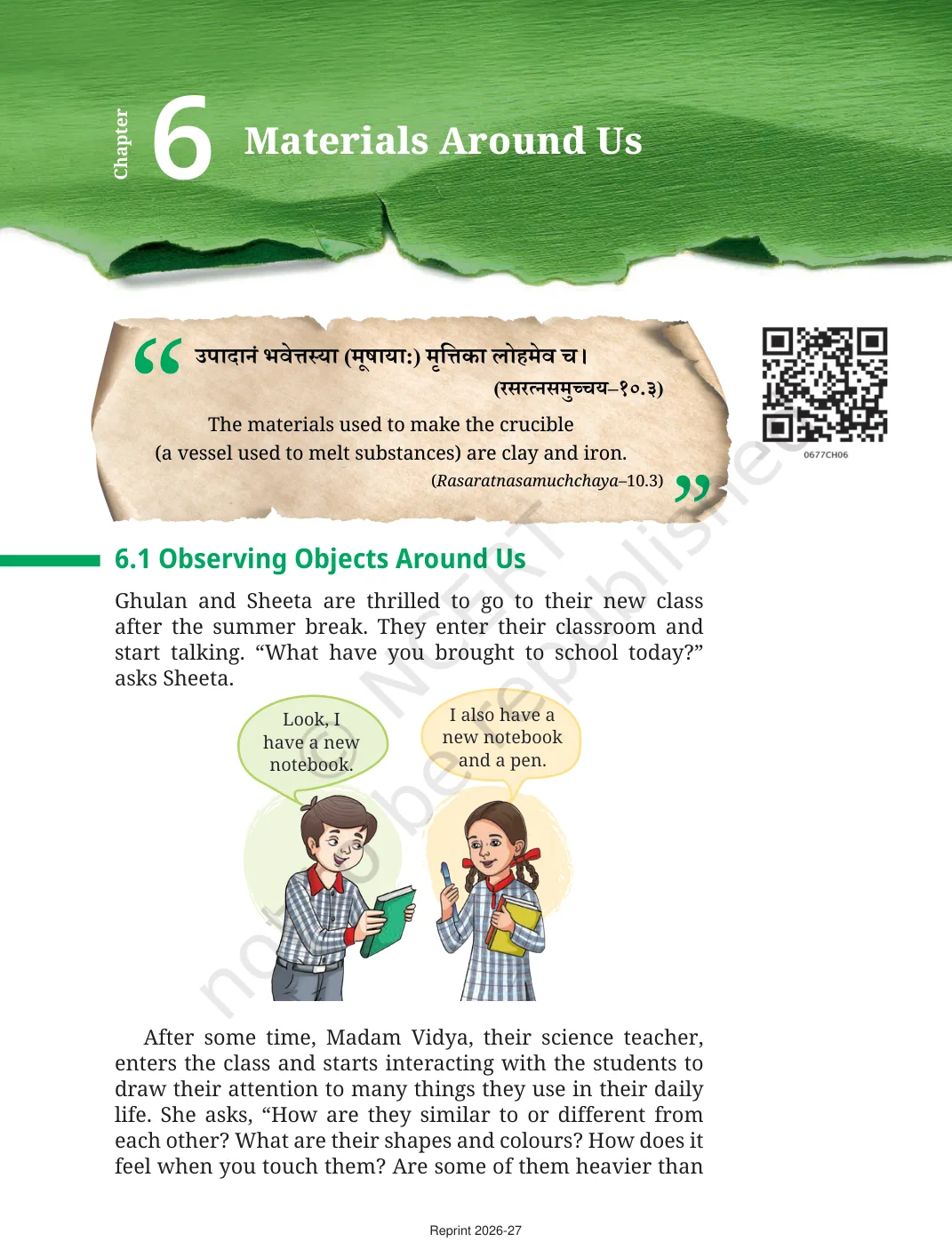
Chapter Opening Page
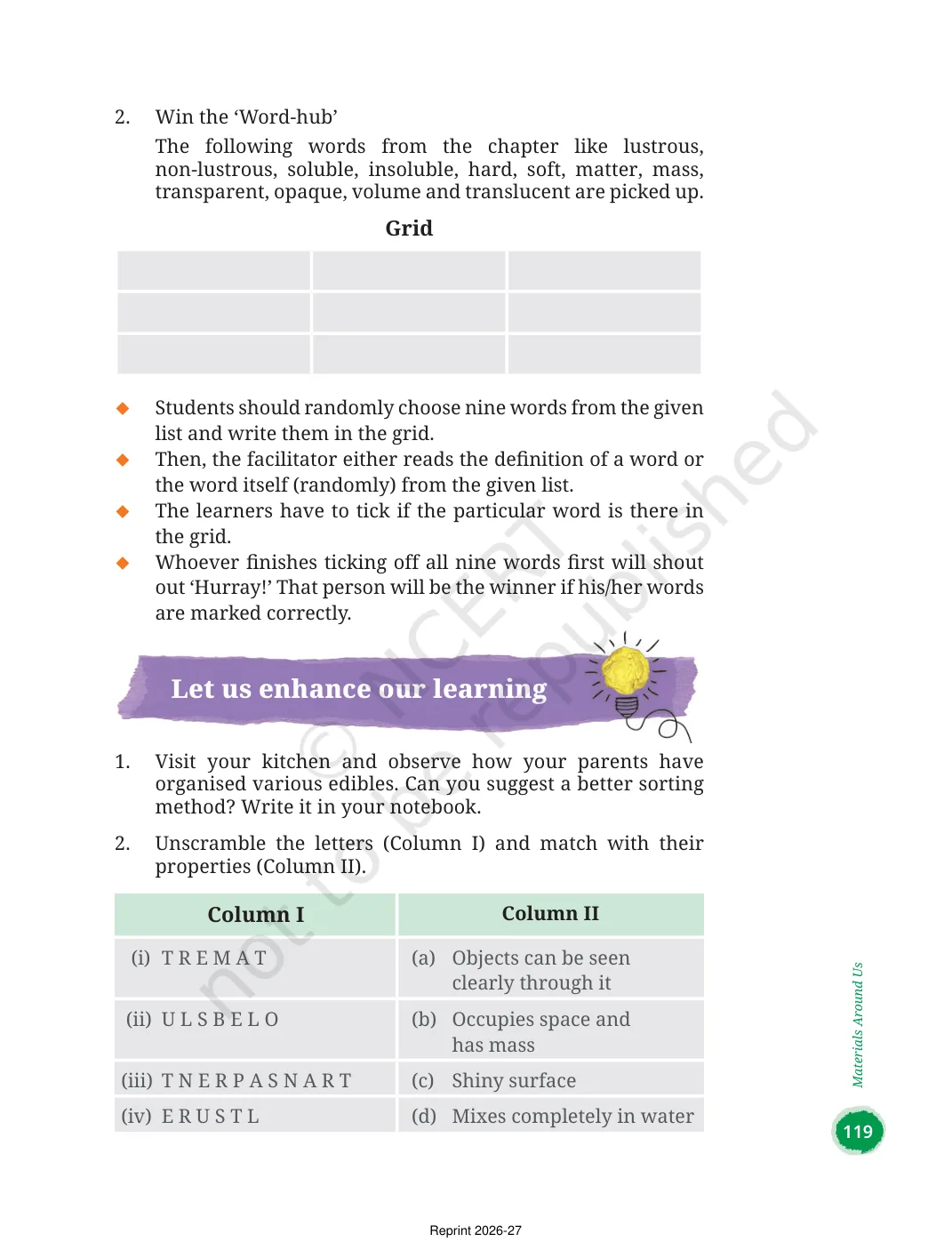
Official Exercise Questions Page
📚 Chapter 6 Summary & Core Scientific Concepts / सारांश एवं प्रमुख अवधारणाएँ
- What is Matter?: Anything that occupies space (volume) and has mass is called matter. Air, water, wood, and stones are all matter.
- Lustre (Shine): Materials with shiny freshly cut surfaces are lustrous (metals like iron, copper, aluminium, gold). Materials without shine are non-lustrous (wood, plastic, chalk).
- Hardness & Compressibility: Hard materials cannot be easily compressed or scratched (stone, diamond, iron). Soft materials can be compressed or deformed easily (cotton, sponge, wax).
- Transparency Categories: Transparent (light passes completely, objects seen clearly, e.g., clear glass, pure water); Translucent (light passes partially, objects seen blurrily, e.g., butter paper, frosted glass); Opaque (no light passes, objects cannot be seen at all, e.g., wood, metal, brick wall).
- पदार्थ (Matter) क्या है?: प्रत्येक वस्तु जो स्थान घेरती है (आयतन) तथा जिसमें द्रव्यमान होता है, पदार्थ कहलाती है। वायु, जल, लकड़ी और पत्थर सभी पदार्थ हैं।
- द्युति या चमक (Lustre): जिन पदार्थों की ताजी कटी सतह चमकदार होती है, वे द्युतिमान या चमकदार कहलाते हैं (धातुएँ जैसे सोना, ताँबा, लोहा)। जो चमकहीन होते हैं वे निष्प्रभ कहलाते हैं (लकड़ी, चॉक)।
- कठोरता एवं संपीड्यता: कठोर पदार्थों को आसानी से दबाया या खरोंचा नहीं जा सकता (लोहा, पत्थर)। कोमल पदार्थों को आसानी से दबाया या मोड़ा जा सकता है (रुई, स्पंज, मोम)।
- पारदर्शिता के प्रकार: पारदर्शी (प्रकाश पूर्णतः आर-पार जाता है, वस्तुएँ स्पष्ट दिखती हैं, जैसे काँच, स्वच्छ जल); पारभासी (प्रकाश आंशिक रूप से गुजरता है, धुंधला दिखता है, जैसे बटर पेपर, घिसा काँच); अपारदर्शी (प्रकाश बिल्कुल आर-पार नहीं जा सकता, कुछ नहीं दिखता, जैसे लकड़ी, धातु, ईंट की दीवार)।
✍️ Official Textbook Solutions: Let Us Enhance Our Learning (अभ्यास के संपूर्ण प्रश्न-उत्तर)
Each question below is taken verbatim from the SCERT CG Board textbook and answered with complete scientific reasoning, step-by-step procedures, and bilingual clarity.
Q1. Visit your kitchen and observe how your parents have organised various edibles. Can you suggest a better sorting method? Write it in your notebook.
Kitchen Observation:
In our kitchen, edibles are mostly stored in plastic and steel containers on shelves. Spices are in small jars near the stove, while flour and rice are in large drums on the floor.
Suggested Improved Sorting Method:
- Transparent, Uniform Containers: Store all dry grocery items (pulses, grains, sugar, salt) in uniform, transparent glass or food-grade PET jars. This allows immediate visual identification of contents and remaining quantity without opening lids.
- Grouping by Usage Frequency:
- Daily Essentials Shelf (Eye Level): Salt, turmeric, chilli powder, tea, sugar, cooking oil.
- Weekly Essentials Shelf (Middle Level): Pulses (dals), rice, poha, suji, spices.
- Bulk Storage (Lower Cabinets): Flour bin, rice drum, potatoes, onions.
- Clear Labelling & First-In, First-Out (FIFO): Paste moisture-proof labels with purchase dates so older stock is consumed before newly bought items.
- Separate Moisture-Proof Storage: Keep crispy snacks, biscuits, and dry spices in airtight containers to prevent them from absorbing atmospheric moisture.
प्र. 1. अपनी रसोई में जाइए और देखिए कि आपके माता-पिता ने विभिन्न खाद्य सामग्रियों को कैसे व्यवस्थित किया है। क्या आप छँटाई (सॉर्टिंग) का कोई बेहतर तरीका सुझा सकते हैं? अपनी कॉपी में लिखिए।
रसोई का अवलोकन:
रसोई में खाद्य सामग्रियाँ अलमारियों में रखी हैं। मसाले गैस चूल्हे के पास छोटी डिब्बियों में हैं तथा आटा और चावल बड़े ड्रमों में रखे हैं।
सुझाया गया बेहतर वर्गीकरण तरीका:
- पारदर्शी डिब्बों का उपयोग: सभी दालों, मसालों, चीनी और नमक को एक समान पारदर्शी काँच या प्लास्टिक के डिब्बों में रखें, जिससे ढक्कन खोले बिना सामग्री और उसकी बची हुई मात्रा तुरंत दिखाई दे।
- उपयोग की आवृत्ति के आधार पर स्तर बनाना:
- दैनिक उपयोगी सामग्री (आँखों के सामने का शेल्फ): नमक, हल्दी, मिर्च, चायपत्ती, चीनी और खाना पकाने का तेल।
- साप्ताहिक उपयोगी सामग्री (मध्यम शेल्फ): विभिन्न दालें, चावल, पोहा, सूजी और साबुत मसाले।
- भारी भंडारण (निचले शेल्फ): गेहूँ का आटा, चावल की बोरी, आलू और प्याज की टोकरियाँ।
- नाम की पर्ची (लेबलिंग) व FIFO नियम: डिब्बों पर नाम व तारीख लिखें ताकि पुरानी सामग्री पहले इस्तेमाल हो और खराब न हो।
- वायुरोधी डिब्बे: बिस्कुट, नमकीन और पापड़ को सीलन से बचाने के लिए एयरटाइट डिब्बों में रखें।
Q2. Unscramble the letters (Column I) and match with their properties (Column II):
| Column I (Scrambled Letters) | Column II (Properties) |
|---|---|
| (i) T R E M A T | (a) Objects can be seen clearly through it |
| (ii) U L S B E L O | (b) Occupies space and has mass |
| (iii) T N E R P A S N A R T | (c) Shiny surface |
| (iv) E R U S T L | (d) Mixes completely in water |
| Unscrambled Word | Property Match |
|---|---|
| (i) MATTER (पदार्थ) | (b) Occupies space and has mass |
| (ii) SOLUBLE (विलेय) | (d) Mixes completely in water |
| (iii) TRANSPARENT (पारदर्शी) | (a) Objects can be seen clearly through it |
| (iv) LUSTRE (द्युति / चमक) | (c) Shiny surface |
प्र. 2. कॉलम I के अक्षरों को सुलझाइए (Unscramble) और कॉलम II में दिए गए उनके गुणों से सुमेलित कीजिए:
| कॉलम I (अव्यवस्थित अक्षर) | कॉलम II (गुणधर्म) |
|---|---|
| (i) T R E M A T | (a) इसके आर-पार वस्तुएँ स्पष्ट देखी जा सकती हैं |
| (ii) U L S B E L O | (b) स्थान घेरता है और इसमें द्रव्यमान होता है |
| (iii) T N E R P A S N A R T | (c) चमकदार सतह |
| (iv) E R U S T L | (d) जल में पूर्णतः घुल जाता है |
| सुलझाया गया शब्द | सही गुणधर्म मिलान |
|---|---|
| (i) MATTER (पदार्थ) | (b) स्थान घेरता है और इसमें द्रव्यमान होता है |
| (ii) SOLUBLE (विलेय) | (d) जल में पूर्णतः घुल जाता है |
| (iii) TRANSPARENT (पारदर्शी) | (a) इसके आर-पार वस्तुएँ स्पष्ट देखी जा सकती हैं |
| (iv) LUSTRE (द्युति/चमक) | (c) चमकदार सतह |
Q3. The containers which are used to store materials in shops and at home are usually transparent. Give your reasons for this.
Transparent containers (made of clear glass or PET plastic) are preferred because:
- Immediate Visual Identification: Light passes completely through transparent materials. Shopkeepers, customers, and cooks can instantly see what item (toffee, pulse, spice, or biscuit) is stored inside without opening the lid.
- Checking Stock Levels: It allows instant monitoring of how much quantity is left inside, signaling when an item needs restocking before it runs completely empty.
- Saves Time and Effort: If opaque containers were used, one would have to open every lid one by one to find an ingredient, wasting time and risking contamination.
- Attractive Display in Shops: In retail shops, colourful confectionery, dry fruits, and pulses visible in transparent jars attract buyers.
प्र. 3. दुकानों और घरों में सामग्री रखने के लिए उपयोग किए जाने वाले डिब्बे आमतौर पर पारदर्शी (Transparent) होते हैं। इसके क्या कारण हैं?
दुकानों और घरों में पारदर्शी डिब्बे (काँच या पारदर्शी प्लास्टिक) इसलिए उपयोग किए जाते हैं क्योंकि:
- बिना खोले पहचान: पारदर्शी सामग्री से प्रकाश आर-पार गुजरता है। दुकानदार, ग्राहक या रसोईया डिब्बे का ढक्कन खोले बिना ही देख सकता है कि अंदर कौन-सी सामग्री (दाल, टॉफी, बिस्कुट आदि) रखी है।
- मात्रा की निगरानी: डिब्बे में कितनी सामग्री बची है, यह बाहर से ही स्पष्ट दिख जाता है, जिससे सामग्री खत्म होने से पहले ही नई खरीदी जा सकती है।
- समय और श्रम की बचत: यदि अपारदर्शी डिब्बे हों, तो किसी वस्तु को ढूँढने के लिए एक-एक करके सारे डिब्बे खोलने पड़ेंगे जिससे समय व्यर्थ होगा।
- दुकानों में आकर्षक प्रदर्शन: पारदर्शी जार में रखी रंग-बिरंगी मिठाइयाँ और खाद्य वस्तुएँ ग्राहकों को आकर्षित करती हैं।
Q4. State whether the statements given below are True [T] or False [F]. Correct the False statement(s):
(i) Wood is translucent while glass is opaque. [ ]
(ii) Aluminium foil has lustre while an eraser does not. [ ]
(iii) Sugar dissolves in water whereas sawdust does not. [ ]
(iv) An apple is a matter because it occupies no space and has mass. [ ]
(i) False [F].
Correct statement: Wood is opaque (blocks all light) while clear glass is transparent (allows light to pass clearly).
(ii) True [T].
Explanation: Aluminium is a metal and possesses metallic lustre, whereas an eraser is made of rubber and has a dull, non-lustrous surface.
(iii) True [T].
Explanation: Sugar molecules dissolve completely between water molecules to form a homogeneous solution, whereas insoluble sawdust floats or settles.
(iv) False [F].
Correct statement: An apple is matter because it occupies space (has volume) AND has mass.
प्र. 4. बताइए कि नीचे दिए गए कथन सत्य [T] हैं या असत्य [F]। असत्य कथन(नों) को सही कीजिए:
(i) लकड़ी पारभासी है जबकि काँच अपारदर्शी है। [ ]
(ii) एल्युमिनियम फॉयल में चमक (द्युति) होती है जबकि रबर (इरेज़र) में नहीं। [ ]
(iii) चीनी जल में घुल जाती है जबकि लकड़ी का बुरादा नहीं घुलता। [ ]
(iv) सेब एक पदार्थ है क्योंकि यह कोई स्थान नहीं घेरता और इसमें द्रव्यमान होता है। [ ]
(i) असत्य [F]।
सही कथन: लकड़ी अपारदर्शी (Opaque) होती है जबकि स्वच्छ काँच पारदर्शी (Transparent) होता है।
(ii) सत्य [T]।
व्याख्या: एल्युमिनियम एक धातु है अतः इसकी सतह चमकदार होती है, जबकि रबर (इरेज़र) निष्प्रभ होती है।
(iii) सत्य [T]।
व्याख्या: चीनी जल में पूर्णतः विलेय है, जबकि लकड़ी का बुरादा अविलेय रहता है।
(iv) असत्य [F]।
सही कथन: सेब एक पदार्थ है क्योंकि यह स्थान घेरता है (आयतन होता है) तथा इसमें द्रव्यमान भी होता है।
Q5. We see chairs made up of various materials, such as wood, iron, plastic, bamboo, cement and stones. Following are some desirable properties of materials which can be used to make chairs. Which materials used to make chairs fulfil these properties the most?
(i) Hardness (does not bend or shake on sitting even after long use).
(ii) Lightweight (easy to lift or to take from one place to another).
(iii) Does not feel very cold when sitting during winters.
(iv) Can be cleaned regularly and made to look new even after long use.
(i) Hardness & High Rigidity: Iron (लोहा) / Cast Steel or Hard Wood. Metals have high tensile strength and rigid crystalline structures that never bend or sag under heavy weights over years.
(ii) Lightweight: Plastic (प्लास्टिक) or Bamboo (बाँस). Both have very low densities, making molded plastic and cane/bamboo chairs exceptionally easy for a single person or child to lift and move around.
(iii) Does not feel cold in winter: Wood (लकड़ी) or Bamboo (बाँस). Wood and bamboo are poor conductors of heat (insulators). They do not conduct body heat away rapidly, keeping the seat comfortably warm to the touch in winter.
(iv) Can be cleaned easily and kept looking new: Molded Plastic (प्लास्टिक) or Stainless Steel. Plastic is completely waterproof, non-porous, and rust-proof. It can be washed with soap and water daily without deteriorating.
प्र. 5. हम लकड़ी, लोहा, प्लास्टिक, बाँस, सीमेंट और पत्थर जैसी विभिन्न सामग्रियों से बनी कुर्सियाँ देखते हैं। कुर्सी बनाने में प्रयुक्त सामग्रियों के कुछ वांछनीय गुण नीचे दिए गए हैं। कुर्सी बनाने की कौन-सी सामग्रियाँ इन गुणों को सबसे अधिक पूरा करती हैं?
(i) कठोरता (लंबे समय तक उपयोग के बाद भी बैठने पर मुड़ती या डगमगाती नहीं है)।
(ii) हल्कापन (एक स्थान से दूसरे स्थान पर ले जाने में आसान)।
(iii) सर्दियों में बैठने पर बहुत ठंडी महसूस नहीं होती।
(iv) जिसे नियमित रूप से साफ किया जा सके और लंबे उपयोग के बाद भी नई जैसी दिखे।
(i) कठोरता व मजबूती: लोहा (Iron) या शीशम/सागौन की ठोस लकड़ी। लोहे की कुर्सी में अत्यधिक भार सहने की क्षमता होती है, यह वर्षों तक बैठने पर भी मुड़ती या हिलती नहीं है।
(ii) हल्कापन (सुगमता से उठाना): प्लास्टिक (Plastic) या बाँस/बेंत (Bamboo)। प्लास्टिक और बाँस का घनत्व कम होता है, इसलिए इनसे बनी कुर्सियाँ बहुत हल्की होती हैं जिन्हें बच्चे भी आसानी से उठा सकते हैं।
(iii) सर्दियों में अधिक ठंडा न लगना: लकड़ी (Wood) या बाँस। लकड़ी ऊष्मा की कुचालक होती है। यह शरीर की गर्मी को तेजी से नहीं खींचती, इसलिए सर्दियों में इस पर बैठने पर ठंडक का अहसास नहीं होता (जबकि लोहे की कुर्सी बहुत ठंडी लगती है)।
(iv) नियमित सफाई व नया जैसा दिखना: प्लास्टिक (Plastic) या स्टेनलेस स्टील। प्लास्टिक जलरोधी होता है और इस पर जंग नहीं लगता। इसे साबुन-पानी से धोकर तुरंत पोंछने पर यह वर्षों तक नया जैसा चमकता रहता है।
Q6. You need to have containers for collection of: (i) food waste, (ii) broken glass and (iii) wastepaper. Which materials will you choose for containers of these types of waste? What properties of materials do you need to think of?
| Waste Type | Chosen Container Material | Essential Material Properties Considered |
|---|---|---|
| (i) Food Waste (Wet Kitchen Waste) | Molded Heavy-Duty Plastic with a Tight-Fitting Lid | Waterproof, non-corrosive, non-porous, washable, and airtight to prevent liquid leakage, rotting odours, and fly infestation. |
| (ii) Broken Glass (Sharp Hazardous Waste) | Thick Metal (Galvanized Iron / Steel) or Rigid Puncture-Proof HDPE Plastic Drum | Puncture resistance, high hardness, tensile strength, and rigidity so sharp jagged glass edges cannot pierce through and injure waste handlers. |
| (iii) Wastepaper (Dry Clean Waste) | Lightweight Cardboard Box or Plastic Mesh Bin | Lightweight, breathable, dry, and economical since paper contains no moisture and poses no sharp puncture hazard. |
प्र. 6. आपको (i) खाद्य अपशिष्ट (गीला कचरा), (ii) टूटा हुआ काँच, और (iii) रद्दी कागज के संग्रहण के लिए डिब्बों (पात्रों) की आवश्यकता है। इन प्रकार के कचरे के लिए आप किन सामग्रियों के पात्र चुनेंगे? आपको सामग्रियों के किन गुणों पर विचार करना होगा?
| कचरे का प्रकार | चुनी गई डिब्बे की सामग्री | विचारणीय आवश्यक भौतिक गुण |
|---|---|---|
| (i) खाद्य अपशिष्ट (गीला कचरा) | ढक्कनदार मजबूत प्लास्टिक की बाल्टी | जलरोधी, अभेद्य, धोने योग्य तथा जंग-मुक्त होना चाहिए ताकि गीला कचरा रिसकर बाहर न फैले और दुर्गंध व मक्खियाँ बंद रहें। |
| (ii) टूटा हुआ काँच (नुकीला कचरा) | मोटी धातु (लोहा/स्टील) का डिब्बा या कठोर प्लास्टिक का ड्रम | अत्यधिक कठोरता, अभेद्यता और मजबूती होनी चाहिए ताकि काँच के नुकीले और धारदार टुकड़े डिब्बे को फाड़कर सफाईकर्मियों को घायल न कर सकें। |
| (iii) रद्दी कागज (सूखा कचरा) | हल्का गत्ते का बॉक्स (कार्डबोर्ड) या जालीदार टोकरी | हल्का, सूखा और सस्ता होना चाहिए क्योंकि कागज में नमी नहीं होती और यह नुकीला भी नहीं होता।
Question 7 Q7. Air is all around us but does not hinder us from seeing each other. Whereas, if a wooden door comes in between, we cannot see each other. It is because air is __________ and the wooden door is __________. Choose the most appropriate option: Answer: Correct option is (i) transparent, opaque. Explanation: प्र. 7. वायु हमारे चारों ओर है परंतु हमें एक-दूसरे को देखने में बाधा नहीं डालती। जबकि यदि बीच में लकड़ी का दरवाजा आ जाए, तो हम एक-दूसरे को नहीं देख पाते। ऐसा इसलिए है क्योंकि वायु __________ है और लकड़ी का दरवाजा __________ है। सर्वाधिक उपयुक्त विकल्प चुनिए: उत्तर: सही विकल्प है (i) पारदर्शी, अपारदर्शी (transparent, opaque)। व्याख्या:
Question 8 Q8. Imagine you have two mysterious materials, X and Y. When you try to press material X, it feels rigid and does not change its shape easily. On the other hand, material Y easily changes its shape when you press it. Now, when you mix both materials in water, only material X dissolves completely, while material Y remains unchanged. What can materials X and Y be? Can you identify whether material X is hard or soft? What about material Y? Justify your answer. Answer:
प्र. 8. कल्पना कीजिए कि आपके पास दो अज्ञात पदार्थ X और Y हैं। जब आप पदार्थ X को दबाने की कोशिश करते हैं, तो वह दृढ़ लगता है और आसानी से अपना आकार नहीं बदलता। दूसरी ओर, पदार्थ Y को दबाने पर वह आसानी से अपना आकार बदल लेता है। जब दोनों पदार्थों को पानी में मिलाया जाता है, तो केवल पदार्थ X पूरी तरह घुल जाता है, जबकि पदार्थ Y अपरिवर्तित रहता है। पदार्थ X और Y क्या हो सकते हैं? क्या आप पहचान सकते हैं कि पदार्थ X कठोर है या कोमल? पदार्थ Y के बारे में क्या कहेंगे? अपने उत्तर की पुष्टि कीजिए। उत्तर:
Question 9 Q9. (i) Who am I? Identify me on the basis of the given properties: Answer: (i) Identifications:
(ii) My Own ‘Who am I?’ Puzzle: प्र. 9. (i) ‘मैं कौन हूँ?’ दिए गए गुणों के आधार पर मुझे पहचानिए: उत्तर: (i) पहेलियों की पहचान:
(ii) स्वयं की बनाई गई पहेली:
Question 10 Q10. You are provided with the following materials—vinegar, honey, mustard oil, water, glucose and wheat flour. Answer: 1. Two Soluble Pairs (विलेय जोड़े):
2. Two Insoluble Pairs (अविलेय जोड़े):
प्र. 10. आपको निम्नलिखित सामग्रियाँ दी गई हैं—सिरका (Vinegar), शहद (Honey), सरसों का तेल (Mustard oil), पानी (Water), ग्लूकोज (Glucose) और गेहूँ का आटा (Wheat flour)। उत्तर: 1. दो विलेय (घुलनशील) जोड़े:
2. दो अविलेय (अघुलनशील) जोड़े:
Link copied to clipboard!
Share with Classmates 📑 Chapter Navigation Directory |