CG SCERT (Chhattisgarh Board) Class 6 Science Solutions | 2026-27 Official Edition
Welcome to the complete, authentic, 100% textbook-grounded CG Board Class 6 Science Chapter 8 Solutions: A Journey through States of Water (जल की विविध अवस्थाओं की यात्रा) in Bilingual Format (English Medium + हिंदी माध्यम). Every single question from the official textbook exercise section (Let us enhance our learning / आइए अपने अधिगम को बढ़ाएँ) has been meticulously solved strictly according to the new NEP 2020 / SCERT Chhattisgarh textbook Curiosity / जिज्ञासा (pp. 143–162 (PDF pp. 161–180)).
📖 Official SCERT Chhattisgarh Textbook Reference Snapshots (pp. 143–162 (PDF pp. 161–180)):
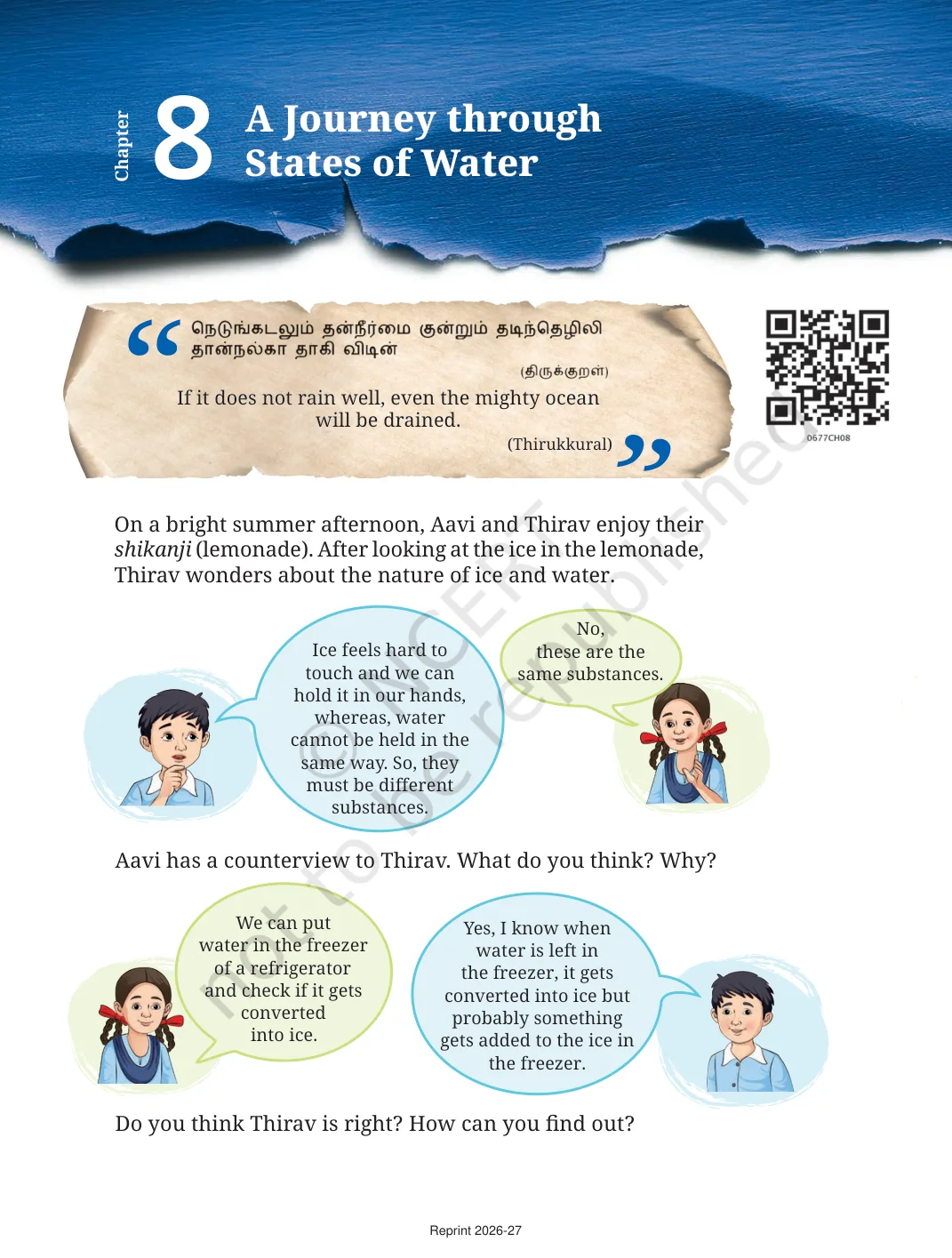
Chapter Opening Page
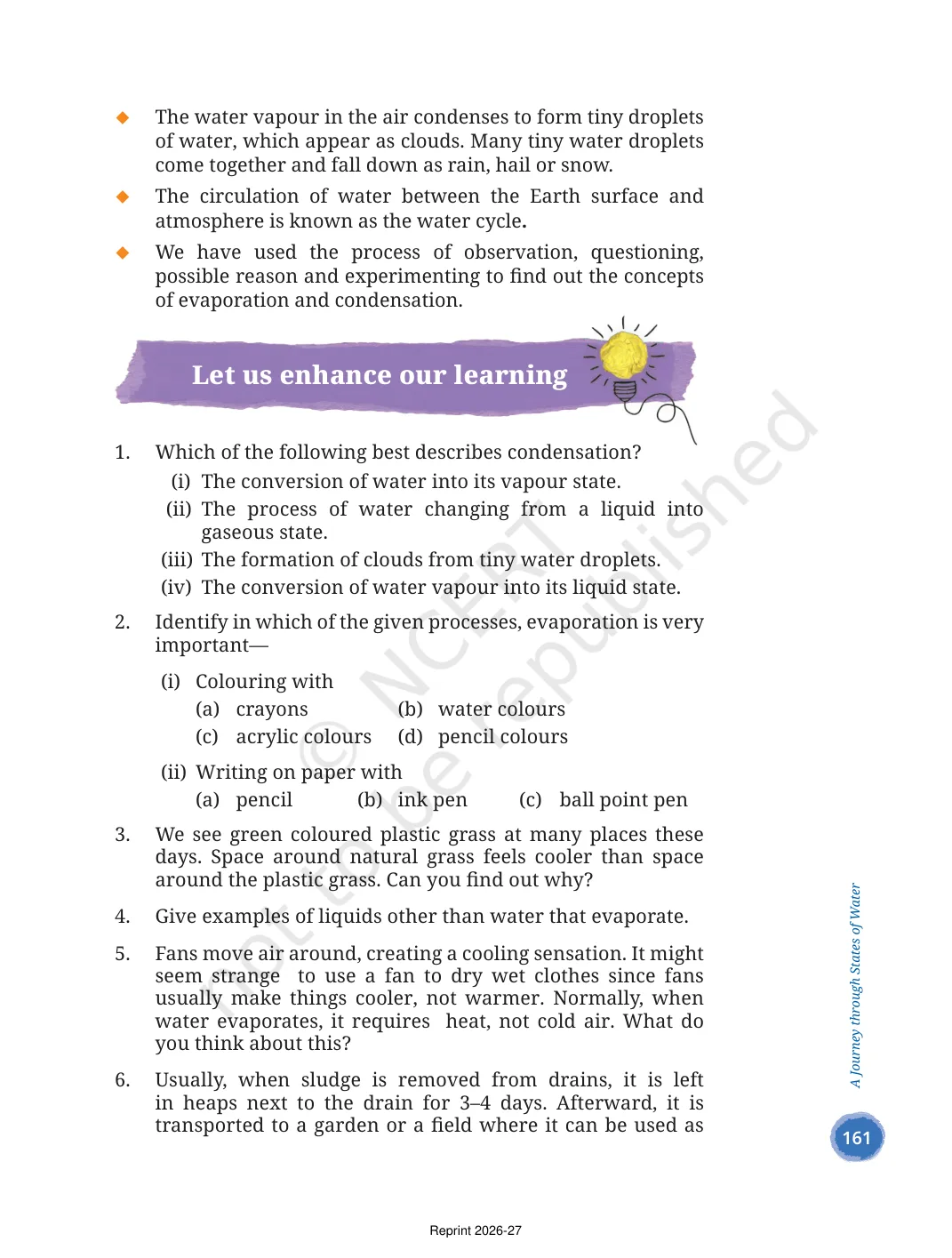
Official Exercise Questions Page
📚 Chapter 8 Summary & Core Scientific Concepts / सारांश एवं प्रमुख अवधारणाएँ
- Three States of Water: Solid (ice below 0°C), Liquid (water between 0°C and 100°C), Gas (water vapour / steam at and above 100°C).
- Evaporation & Factors Affecting It: The conversion of liquid water into vapour below its boiling point. Evaporation rate increases with: higher temperature, larger surface area, higher wind speed, and lower humidity.
- Evaporative Cooling: When liquid evaporates, it absorbs latent heat of vaporization from its surroundings, causing a cooling sensation (e.g., sweating, earthen pot cooling).
- Condensation & Water Cycle: The conversion of water vapour into liquid droplets upon cooling forms clouds, dew, and rain. The continuous circulation between Earth and atmosphere constitutes the water cycle.
- जल की तीन अवस्थाएँ: ठोस (0°C से नीचे बर्फ), द्रव (0°C से 100°C तक जल), गैस (100°C या उससे ऊपर जलवाष्प/भाप)।
- वाष्पीकरण एवं इसे प्रभावित करने वाले कारक: क्वथनांक से कम तापमान पर द्रव का वाष्प में बदलना। वाष्पीकरण की दर तापमान बढ़ने, पृष्ठीय क्षेत्रफल बढ़ने, वायु की गति बढ़ने तथा आर्द्रता घटने पर बढ़ती है।
- वाष्पीकरण से शीतलन: वाष्पीकरण के दौरान द्रव अपने आस-पास से गुप्त ऊष्मा सोखता है, जिससे ठंडक उत्पन्न होती है (जैसे पसीने का सूखना, मटके का पानी ठंडा होना)।
- संघनन एवं जल चक्र: जलवाष्प का ठंडा होकर द्रव की नन्हीं बूँदों में बदलना संघनन कहलाता है, जिससे बादल और ओस बनते हैं। पृथ्वी और वायुमंडल के बीच जल का निरंतर चक्रण ‘जल चक्र’ कहलाता है।
✍️ Official Textbook Solutions: Let Us Enhance Our Learning (अभ्यास के संपूर्ण प्रश्न-उत्तर)
Each question below is taken verbatim from the SCERT CG Board textbook and answered with complete scientific reasoning, step-by-step procedures, and bilingual clarity.
Q1. Which of the following best describes condensation?
(i) The conversion of water into its vapour state.
(ii) The process of water changing from a liquid into gaseous state.
(iii) The formation of clouds from tiny water droplets.
(iv) The conversion of water vapour into its liquid state.
Explanation: Condensation is the phase change from gas/vapour to liquid upon cooling (the reverse of evaporation).
प्र. 1. निम्नलिखित में से कौन-सा विकल्प संघनन (Condensation) का सर्वोत्तम वर्णन करता है?
(i) जल का उसकी वाष्प अवस्था में रूपांतरण।
(ii) जल के द्रव से गैसीय अवस्था में बदलने की प्रक्रिया।
(iii) पानी की छोटी बूँदों से बादलों का निर्माण।
(iv) जलवाष्प का उसकी द्रव अवस्था में रूपांतरण।
व्याख्या: जलवाष्प (गैस) के ठंडे होकर पुनः द्रव (जल) में बदलने की क्रिया संघनन कहलाती है।
Q2. Identify in which of the given processes, evaporation is very important—
(i) Colouring with: (a) crayons, (b) water colours, (c) acrylic colours, (d) pencil colours
(ii) Writing on paper with: (a) pencil, (b) ink pen, (c) ball point pen
(i) (b) water colours (and acrylic colours): In water colours, water acts as the liquid carrier. Once painted on paper, the water must evaporate away completely to leave the dry, permanent pigment fixed on the paper.
(ii) (b) ink pen: An ink pen uses liquid water-based ink. When writing on paper, the liquid solvent evaporates quickly into the surrounding air so that the ink dries and does not smudge when touched.
प्र. 2. पहचानिए कि दी गई किन प्रक्रियाओं में वाष्पीकरण अत्यंत महत्वपूर्ण है—
(i) चित्रकारी (Colouring) में: (a) मोम के रंग (crayons), (b) जल रंग (water colours), (c) ऐक्रेलिक रंग, (d) पेंसिल के रंग
(ii) कागज पर लिखने में: (a) पेंसिल, (b) स्याही वाला पेन (ink pen), (c) बॉल प्वाइंट पेन
(i) (b) जल रंग (Water colours): वाटर कलर में पानी रंग को फैलाने का माध्यम होता है। कागज पर चित्र बनाने के बाद जब पानी वाष्पीकृत होकर उड़ जाता है, तभी रंग सूखकर पक्का होता है।
(ii) (b) स्याही वाला पेन (Ink pen): इंक पेन में द्रव स्याही होती है। लिखते समय स्याही के जलीय भाग का तेजी से वाष्पीकरण होना आवश्यक है ताकि लिखावट तुरंत सूख जाए और पन्नों पर फैले नहीं।
Q3. We see green coloured plastic grass at many places these days. Space around natural grass feels cooler than space around the plastic grass. Can you find out why?
Reason:
- Transpiration in Natural Grass: Living natural grass continuously absorbs water from the soil and releases water vapour into the surrounding air through stomata in its blades (transpiration). During evaporation of this water, heat energy is absorbed from the surrounding air, creating a natural and noticeable evaporative cooling effect.
- Artificial Plastic Grass Does Not Transpire: Plastic grass is non-living synthetic polymer (polyethylene). It cannot transpire. Furthermore, dark green plastic absorbs solar radiation, heats up significantly, and radiates heat back into the surrounding air, making the area hot and stuffy.
प्र. 3. आजकल कई स्थानों पर हरे रंग की प्लास्टिक की कृत्रिम घास देखी जाती है। प्राकृतिक घास के आस-पास की जगह प्लास्टिक की घास की तुलना में अधिक ठंडी महसूस होती है। क्या आप इसका कारण बता सकते हैं?
वैज्ञानिक कारण:
- प्राकृतिक घास में वाष्पोत्सर्जन (Transpiration): जीवित प्राकृतिक घास की पत्तियाँ जड़ों द्वारा अवशोषित जल को लगातार वाष्प के रूप में वायुमंडल में छोड़ती रहती हैं। इस वाष्पीकरण के लिए आवश्यक गुप्त ऊष्मा आस-पास की वायु से ली जाती है, जिससे वातावरण में स्वाभाविक शीतलन प्रभाव (Cooling effect) उत्पन्न होता है।
- प्लास्टिक की घास निर्जीव है: प्लास्टिक घास में वाष्पोत्सर्जन नहीं होता। इसके विपरीत, प्लास्टिक धूप की ऊष्मा को सोखकर अत्यधिक गर्म हो जाता है और उस ऊष्मा को वापस हवा में छोड़ता है, जिससे वहाँ गर्मी महसूस होती है।
Q4. Give examples of liquids other than water that evaporate.
Examples of volatile liquids that evaporate readily at room temperature:
- Hand Sanitizer / Rubbing Alcohol (Ethanol / Isopropanol): Evaporates almost instantly on skin, leaving a cold sensation.
- Acetone (Nail Polish Remover): Highly volatile liquid that evaporates within seconds.
- Petrol / Diesel: Volatile hydrocarbon fuel that vaporizes readily upon exposure to air.
- Perfumes and Deodorants: Contain alcohol bases that evaporate, carrying fragrance molecules into the air.
- Spirit / Ether: Used in medical laboratories for fast sterilization.
प्र. 4. जल के अतिरिक्त अन्य ऐसे द्रवों के उदाहरण दीजिए जो वाष्पीकृत होते हैं।
पानी के अतिरिक्त कमरे के तापमान पर तेजी से वाष्पीकृत होने वाले द्रव निम्नलिखित हैं:
- हैंड सैनिटाइज़र / रबिंग अल्कोहल (Alcohol): हथेली पर लगाते ही तुरंत उड़ जाता है और ठंडक देता है।
- नेल पॉलिश रिमूवर (एसीटोन – Acetone): यह बहुत तेजी से वाष्पीकृत होने वाला द्रव है।
- पेट्रोल (Petrol): खुली हवा में रखने पर कुछ ही देर में वाष्प बनकर उड़ जाता है।
- इत्र और परफ्यूम (Perfume): इनमें वाष्पशील अल्कोहल होता है जो उड़ते समय सुगंध हवा में फैलाता है।
- स्पिरिट (Spirit): डॉक्टरी सुई लगाने से पहले त्वचा साफ करने में प्रयुक्त द्रव।
Q5. Fans move air around, creating a cooling sensation. It might seem strange to use a fan to dry wet clothes since fans usually make things cooler, not warmer. Normally, when water evaporates, it requires heat, not cold air. What do you think about this?
Scientific Explanation:
A fan does not cool by dropping air temperature; rather, it increases air circulation and wind speed:
- Removal of Saturated Air: When wet clothes hang in still air, water evaporates and quickly forms a localized humid, moisture-saturated layer of air directly surrounding the cloth. In still air, this high humidity slows down further evaporation.
- Accelerating Evaporation: The running fan blows away this stagnant, moisture-laden air and continuously replaces it with fresher, drier room air. Dry air absorbs water vapour much more rapidly, drastically speeding up the rate of evaporation.
- Latent Heat is Available: The latent heat of vaporization is supplied by the surrounding room air and the fabric itself. Hence, wet clothes dry quickly under a fan even though the air feels cool!
प्र. 5. पंखे हवा को घुमाते हैं, जिससे ठंडक का अहसास होता है। गीले कपड़ों को सुखाने के लिए पंखे का उपयोग करना अजीब लग सकता है क्योंकि पंखे आमतौर पर चीजों को गर्म नहीं बल्कि ठंडा करते हैं। सामान्यतः जब पानी वाष्पीकृत होता है, तो उसे ऊष्मा की आवश्यकता होती है, ठंडी हवा की नहीं। इस बारे में आपका क्या सोचना है?
वैज्ञानिक स्पष्टीकरण:
पंखा कमरे के तापमान को कम नहीं करता, बल्कि वायु की गति और परिसंचरण को बढ़ाता है:
- आर्द्र हवा को हटाना: जब गीले कपड़े स्थिर हवा में टंगे होते हैं, तो उनसे निकलने वाली जलवाष्प कपड़ों के चारों ओर एक नम हवा की परत बना लेती है। उच्च आर्द्रता के कारण वाष्पीकरण की गति बहुत धीमी हो जाती है।
- वाष्पीकरण की दर में वृद्धि: पंखा चलने पर हवा का तेज झोंका कपड़ों के आस-पास की इस नमीयुक्त हवा को तुरंत उड़ा देता है और उसका स्थान अपेक्षाकृत सूखी हवा ले लेती है। सूखी हवा में वाष्पीकरण बहुत तेजी से होता है।
- आवश्यक ऊष्मा की आपूर्ति: वाष्पीकरण के लिए आवश्यक ऊष्मा कमरे की सामान्य हवा और कपड़े से ही प्राप्त हो जाती है। इसलिए पंखे की ठंडी हवा में भी कपड़े बहुत तेजी से सूख जाते हैं।
Q6. Usually, when sludge is removed from drains, it is left in heaps next to the drain for 3–4 days. Afterward, it is transported to a garden or a field where it can be used as manure. This approach reduces transportation cost of the sludge and enhances the safety of individuals handling it. Reflect upon it and explain how.
- Reduction in Weight and Transportation Cost: Freshly excavated drain sludge contains up to 80–90% water by weight. When left in open heaps under sunlight and wind for 3–4 days, water drains out and evaporates continuously. As the sludge dries, its total volume shrinks and its weight is reduced by several times. Consequently, fewer truck trips are needed, saving fuel and transportation costs.
- Enhanced Safety of Handlers: Wet slurry splashes easily, contaminating skin, clothes, and roads with dangerous pathogenic bacteria and foul wastewater. Once solar-dried, the sludge solidifies into moist cake/crumbs that do not splash or drip during loading. Furthermore, exposure to ultraviolet (UV) solar radiation and drying kills many harmful disease-causing microbes, making handling substantially safer and less hazardous.
प्र. 6. आमतौर पर जब नालियों से कीचड़ (स्लज) निकाला जाता है, तो उसे 3-4 दिनों के लिए नाली के पास ही ढेरों में छोड़ दिया जाता है। बाद में इसे किसी बगीचे या खेत में ले जाया जाता है जहाँ इसका उपयोग खाद के रूप में किया जा सकता है। यह तरीका कीचड़ के परिवहन खर्च को कम करता है और इसे संभालने वाले व्यक्तियों की सुरक्षा को बढ़ाता है। विचार कीजिए और समझाइए कैसे।
- वजन और परिवहन खर्च में भारी कमी: नाली से तुरंत निकाले गए कीचड़ में 80 से 90% तक केवल पानी होता है, जिससे वह बहुत भारी होता है। धूप और हवा में 3-4 दिन पड़े रहने से अतिरिक्त पानी बह जाता है और वाष्पीकृत हो जाता है। सूखने पर कीचड़ का वजन और आयतन बहुत कम हो जाता है, जिससे कम गाड़ियों में सारा कीचड़ ढोया जा सकता है और परिवहन खर्च की भारी बचत होती है।
- सफाईकर्मियों की सुरक्षा में सुधार: गीला कीचड़ इधर-उधर छिटकता है और रिसता है, जिससे संक्रामक जीवाणुओं और गंदे पानी के संपर्क में आने का खतरा रहता है। सूख जाने पर यह ठोस खाद के ढेलों जैसा बन जाता है जिसे फावड़े से उठाना आसान होता है और यह छिटकता नहीं है। धूप की पराबैंगनी किरणों से हानिकारक रोगाणु भी नष्ट हो जाते हैं।
Q7. Observe the activities in your house for a day. Identify the activities that involve evaporation. How does understanding the process of evaporation help us in our daily activities?
1. Daily Activities Involving Evaporation:
- Drying wet laundry washed in water.
- Mopping the floor with a wet rag (floor dries in minutes).
- Cooling drinking water in an earthen pot (matka/surahi).
- Boiling tea, lentils, or simmering curries until thickened.
- Sweating after playing or exercising (perspiration evaporates to cool body).
- Wiping blackboard with a damp cloth in school.
2. How Understanding Evaporation Helps Us:
- Drying clothes faster: Knowing that larger surface area and wind speed accelerate evaporation, we spread wet clothes out fully on clotheslines in sunny, windy spots rather than leaving them crumpled.
- Natural Cooling without Electricity: We use porous clay pots (matkas) to enjoy cool drinking water in summer without spending electricity on refrigerators.
- Comfort in Summer: We wear breathable cotton fabrics that absorb sweat and allow it to evaporate rapidly, keeping us cool and preventing prickly heat.
प्र. 7. एक दिन के लिए अपने घर की गतिविधियों का अवलोकन कीजिए। उन गतिविधियों की पहचान कीजिए जिनमें वाष्पीकरण शामिल है। वाष्पीकरण की प्रक्रिया को समझना हमारी दैनिक गतिविधियों में किस प्रकार सहायता करता है?
1. वाष्पीकरण से जुड़ी दैनिक गतिविधियाँ:
- धुले हुए गीले कपड़ों का सूखना।
- फर्श पर पोछा लगाने के बाद फर्श का सूखना।
- मिट्टी के मटके या सुराही में पीने का पानी ठंडा होना।
- खाना बनाते समय दाल, चाय या चाशनी का गाढ़ा होना।
- खेलने के बाद शरीर से पसीने का सूखना।
- गीले हाथ हवा में सुखाना।
2. वाष्पीकरण की समझ का दैनिक जीवन में लाभ:
- कपड़े तेजी से सुखाना: हमें पता है कि सतह का फैलाव और हवा की गति वाष्पीकरण बढ़ाती है, इसलिए हम कपड़ों को निचोड़कर धूप और हवा में फैलाकर सुखाते हैं।
- सस्ती प्राकृतिक ठंडक: गर्मियों में बिना बिजली खर्च किए मटके का शीतल जल प्राप्त करते हैं।
- गर्मियों में सूती कपड़े पहनना: सूती कपड़े पसीना सोखकर तेजी से वाष्पीकृत करते हैं जिससे शरीर ठंडा रहता है।
Q8. How is water present in the solid state in nature?
In nature, water exists in the solid state as crystalline ice and snow under freezing temperatures (0 °C or lower):
- Snow on Mountain Peaks: High altitude Himalayan mountain peaks are permanently capped with dense blankets of white snow.
- Glaciers: Giant slow-moving rivers of compressed ice formed over centuries (e.g., Gangotri and Yamunotri glaciers).
- Polar Ice Caps & Icebergs: Vast sheets of floating and continental ice cover Antarctica and the Arctic polar region.
- Hailstones (ओले): Frozen spheres of ice that precipitate during severe thunderstorms.
- Frost & Dew Ice (तुषार/पाला): During cold winter nights, atmospheric moisture condenses and freezes directly onto grass blades and soil as delicate ice crystals.
प्र. 8. प्रकृति में जल ठोस अवस्था (Solid State) में किस प्रकार उपस्थित रहता है?
प्रकृति में जल शून्य डिग्री सेल्सियस (0 °C) या उससे नीचे ठोस अवस्था में निम्नलिखित रूपों में पाया जाता है:
- पर्वतों पर हिम (बर्फ): हिमालय जैसे ऊँचे पर्वतों की चोटियाँ साल भर बर्फ की सफेद चादर से ढकी रहती हैं।
- हिमनद या ग्लेशियर (Glaciers): बर्फ की विशालकाय नदियाँ जो सदियों से जमी हुई हैं (जैसे गंगोत्री और यमुनोत्री हिमनद)।
- ध्रुवीय हिमखंड (Polar Ice Caps): उत्तरी ध्रुव (आर्कटिक) और दक्षिणी ध्रुव (अंटार्कटिका) पर जमी हुई अथाह बर्फ और समुद्र में तैरते हिमशैल (Icebergs)।
- ओले (Hailstones): बादलों में पानी की बूँदें जमकर बर्फ के गोलों के रूप में बारिश के साथ गिरती हैं।
- पाला या तुषार (Frost): अत्यधिक ठंड वाली सर्दियों की रातों में घास और पत्तियों पर जमी जलवाष्प बर्फ की नन्हीं सफेद परतों के रूप में जम जाती है।
Q9. Reflect on the statement “Water is our responsibility before it is our right.” Share your thoughts.
Reflection:
Water is indispensable for all living beings, yet freshwater makes up less than 1% of all water on Earth. Often, humans treat water merely as an entitlement—wasting clean tap water, polluting rivers with garbage, and exhausting underground aquifers indiscriminately.
Why Responsibility Comes Before Right:
- Rights Without Conservation Lead to Catastrophe: If we only demand 24/7 water supply as our right but shirk the duty of conservation, aquifers will run dry, leaving nothing for our own future and for our children.
- Protecting the Shared Commons: Rivers, ponds, and groundwater belong to all creatures—birds, animals, forests, and human communities alike. Dumping plastic and untreated sewage destroys aquatic biodiversity.
- Actionable Responsibilities:
- Practicing rainwater harvesting at home and school.
- Turning off taps while brushing or soaping hands; fixing leaks promptly.
- Reusing wastewater (e.g., vegetable wash water for watering plants).
- Treating every single drop of water as precious gold.
प्र. 9. “जल हमारा अधिकार होने से पहले हमारी जिम्मेदारी है।” इस कथन पर विचार कीजिए और अपने विचार साझा कीजिए।
विचार एवं चिंतन:
जल जीवन का आधार है, परंतु पृथ्वी पर उपलब्ध कुल जल का 1% से भी कम हिस्सा मीठे और पीने योग्य पानी के रूप में है। अक्सर मनुष्य जल को केवल अपना अधिकार मानकर नलों को खुला छोड़ देते हैं, नदियों में कचरा डालते हैं और भूजल का अत्यधिक दोहन करते हैं।
जिम्मेदारी अधिकार से पहले क्यों है?
- संरक्षण के बिना अधिकार व्यर्थ है: यदि हम केवल पानी पाने का अधिकार जताएँगे परंतु उसे बचाने की जिम्मेदारी नहीं निभाएँगे, तो बहुत जल्द धरती के जलस्रोत सूख जाएंगे और आने वाली पीढ़ियों के लिए बूँद-बूँद पानी का संकट खड़ा हो जाएगा।
- प्रकृति के अन्य जीवों का हक: नदियाँ, तालाब और कुएँ केवल मनुष्य के लिए नहीं हैं, बल्कि पशु-पक्षियों और वनस्पतियों का भी उन पर समान अधिकार है। जल को प्रदूषित न करना हमारा नैतिक कर्तव्य है।
- हमारी व्यक्तिगत जिम्मेदारियाँ:
- घरों और विद्यालयों में वर्षा जल संचयन (Rainwater harvesting) अपनाना।
- ब्रश करते समय नल बंद रखना तथा टपकते नलों की तुरंत मरम्मत करना।
- सब्जियाँ धोने के पानी को पौधों में डालना।
- जल की एक-एक बूँद को अमूल्य समझकर उसका सदुपयोग करना।
Q10. The seat of a two-wheeler parked on a sunny day has become very hot. How can you cool it down quickly?
Immediate Cooling Method:
Wipe the scorching seat thoroughly with a damp wet cloth or sprinkle a few splashes of water directly on the seat cushion.
Scientific Principle (Evaporative Cooling):
The seat leather absorbs intense heat from sunlight. When water is spread thinly across the hot seat, the water rapidly absorbs the thermal energy (latent heat of vaporization) directly from the seat material and turns into water vapour. This heat transfer instantaneously cools down the seat surface within 15–30 seconds, making it comfortable to sit on.
प्र. 10. धूप में खड़ी दोपहिया वाहन (मोटरसाइकिल या स्कूटर) की सीट बहुत गर्म हो गई है। आप इसे तुरंत कैसे ठंडा कर सकते हैं?
त्वरित ठंडा करने का उपाय:
गर्म सीट पर एक गीले कपड़े से पोंछा लगाएँ अथवा उस पर थोड़े से पानी के छींटे मारकर कपड़े से फैला दें।
वैज्ञानिक सिद्धांत (वाष्पीकरण द्वारा शीतलन):
धूप के कारण सीट का तापमान बहुत बढ़ जाता है। जब सीट पर पानी की पतली परत लगाई जाती है, तो वह पानी सीट से ऊष्मा (वाष्पीकरण की गुप्त ऊष्मा) को तेजी से सोखकर वाष्प बनकर उड़ जाता है। सीट से ऊष्मा खिंच जाने के कारण सीट 15-30 सेकंड के भीतर तुरंत ठंडी हो जाती है और बैठने योग्य बन जाती है।