CG SCERT (Chhattisgarh Board) Class 6 Science Solutions | 2026-27 Official Edition
Welcome to the complete, authentic, 100% textbook-grounded CG Board Class 6 Science Chapter 10 Solutions: Living Creatures: Exploring their Characteristics (सजीव— विशेषताओं का अन्वेषण) in Bilingual Format (English Medium + हिंदी माध्यम). Every single question from the official textbook exercise section (Let us enhance our learning / आइए अपने अधिगम को बढ़ाएँ) has been meticulously solved strictly according to the new NEP 2020 / SCERT Chhattisgarh textbook Curiosity / जिज्ञासा (pp. 183–206 (PDF pp. 201–224)).
📖 Official SCERT Chhattisgarh Textbook Reference Snapshots (pp. 183–206 (PDF pp. 201–224)):
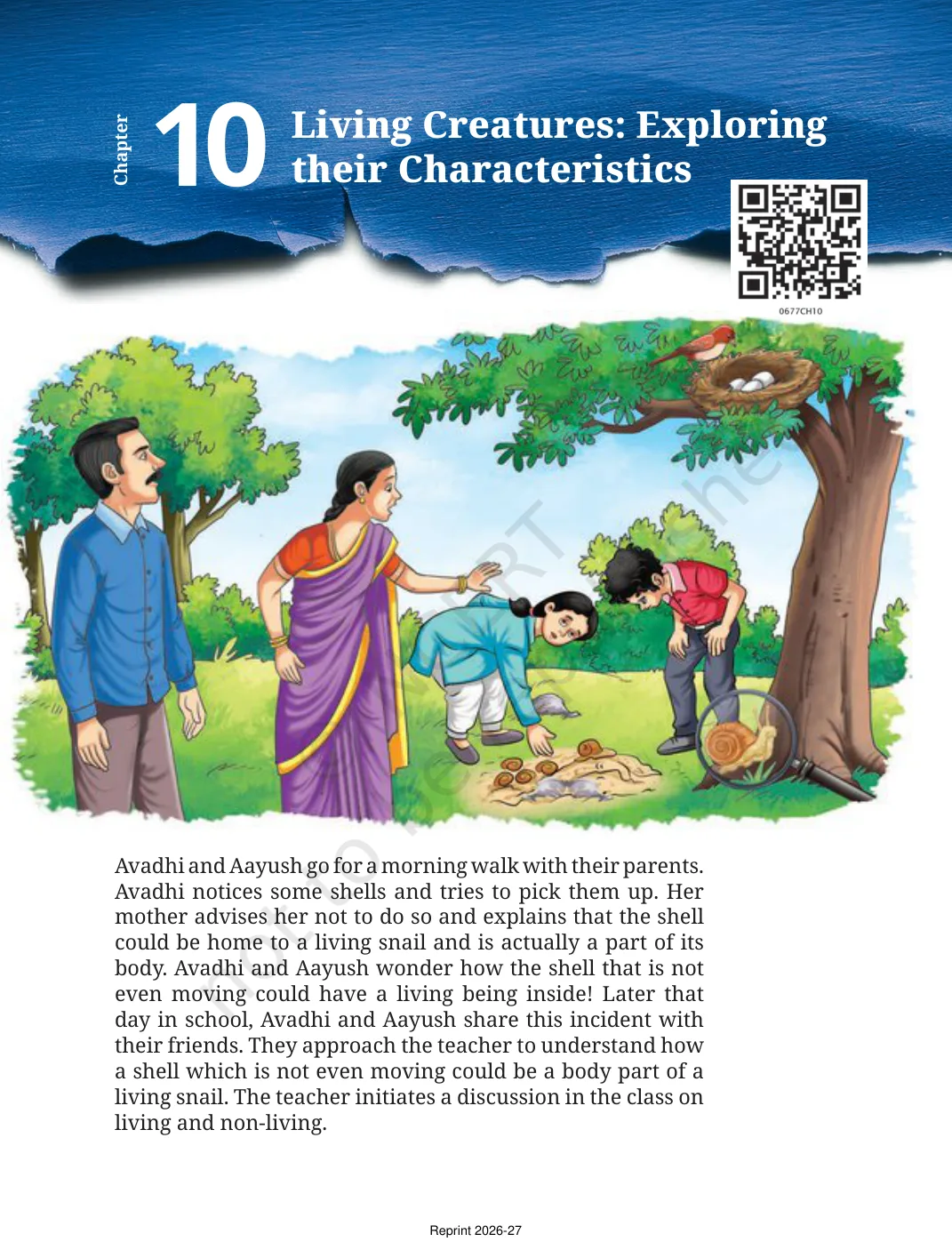
Chapter Opening Page

Official Exercise Questions Page
📚 Chapter 10 Summary & Core Scientific Concepts / सारांश एवं प्रमुख अवधारणाएँ
- Core Characteristics of Living Things: Living things require nutrition (food), grow over time, respire to release energy, excrete wastes, respond to external stimuli, reproduce their own kind, and have a finite lifespan ending in death.
- Breathing vs Respiration: Breathing is the physical gas exchange (inhaling O2, exhaling CO2). Respiration is the intracellular biochemical breakdown of glucose with oxygen to release vital energy (ATP).
- Response to Stimuli (Irritability): Living things sense and react to environmental changes (stimuli). E.g., touching a hot pan causes hand withdrawal; Mimosa pudica (Touch-me-not) folds its leaves on touch; plant shoots bend towards sunlight (phototropism).
- Metamorphosis & Life Cycles: Frog: Egg -> Tadpole (aquatic with gills) -> Froglet -> Adult frog (lungs/skin). Mosquito: Egg -> Larva (wriggler) -> Pupa (tumbler) -> Adult mosquito.
- सजीवों के मूलभूत लक्षण: सजीव भोजन (पोषण) ग्रहण करते हैं, वृद्धि करते हैं, श्वसन करते हैं, अपशिष्टों का उत्सर्जन करते हैं, उद्दीपनों के प्रति अनुक्रिया करते हैं, अपनी प्रजाति का प्रजनन करते हैं तथा उनका एक निश्चित जीवन चक्र और मृत्यु होती है।
- श्वास लेना बनाम श्वसन: श्वास लेना केवल फेफड़ों द्वारा गैसों का भौतिक विनिमय (O2 लेना व CO2 छोड़ना) है। श्वसन कोशिकाओं के अंदर ग्लूकोज के विखंडन से ऊर्जा मुक्त करने की जैव-रासायनिक प्रक्रिया है।
- उद्दीपन के प्रति अनुक्रिया: वातावरण में होने वाले परिवर्तनों (उद्दीपन) के प्रति प्रतिक्रिया व्यक्त करना। जैसे गर्म बर्तन छूते ही हाथ खींचना, छुईमुई के पत्तों का सिकुड़ना, पौधे के तने का सूर्य के प्रकाश की ओर मुड़ना।
- कायांतरण एवं जीवन चक्र: मेंढक: अंडा -> टैडपोल (मछली जैसा जलीय लार्वा) -> फ्रॉगलेट -> वयस्क मेंढक। मच्छर: अंडा -> लार्वा (व्रिग्लर) -> प्यूपा -> वयस्क मच्छर।
✍️ Official Textbook Solutions: Let Us Enhance Our Learning (अभ्यास के संपूर्ण प्रश्न-उत्तर)
Each question below is taken verbatim from the SCERT CG Board textbook and answered with complete scientific reasoning, step-by-step procedures, and bilingual clarity.
Q1. What are the common characteristics of all living organisms? List and explain at least five.
The essential characteristics shared by all living organisms are:
- Nutrition (Need for Food): All living things require food to obtain energy for metabolic activities, cellular repair, and healthy body development.
- Respiration: Living cells break down absorbed food with oxygen to release life-sustaining biochemical energy while eliminating carbon dioxide.
- Growth & Development: Living beings increase irreversibly in size and complexity from within (e.g., an embryo grows into an adult).
- Response to Stimuli: Living organisms possess sensitivity to detect and respond to environmental changes like heat, light, sound, touch, and chemical scents.
- Excretion: Removal of toxic, metabolic nitrogenous wastes and excess salts from the internal body fluids.
- Reproduction: The biological capacity to produce offspring of their own kind, ensuring survival of the species across generations.
प्र. 1. सभी सजीवों के सामान्य लक्षण कौन-से हैं? किन्हीं पाँच लक्षणों की सूची बनाकर व्याख्या कीजिए।
सभी सजीवों में पाए जाने वाले पाँच प्रमुख लक्षण निम्नलिखित हैं:
- पोषण (भोजन की आवश्यकता): सभी जीवों को ऊर्जा प्राप्त करने, शरीर की वृद्धि और ऊतकों की मरम्मत के लिए भोजन की आवश्यकता होती है।
- श्वसन (Respiration): सजीव भोजन से ऊर्जा मुक्त करने के लिए श्वसन क्रिया करते हैं, जिसमें ऑक्सीजन का उपयोग होता है और कार्बन डाइऑक्साइड बाहर निकलती है।
- वृद्धि (Growth): सभी सजीवों में आंतरिक रूप से आकार और भार में स्थायी वृद्धि होती है (जैसे बीज से विशाल वृक्ष बनना)।
- उद्दीपन के प्रति अनुक्रिया (Response to Stimuli): सजीव अपने वातावरण में होने वाले परिवर्तनों (प्रकाश, ताप, स्पर्श आदि) को महसूस करते हैं और उनके प्रति प्रतिक्रिया देते हैं।
- उत्सर्जन (Excretion): शरीर में उपापचय के दौरान बनने वाले हानिकारक व विषैले अपशिष्टों को बाहर निकालना।
- प्रजनन (Reproduction): अपनी ही जैसी संतान उत्पन्न करने की क्षमता, जिससे पृथ्वी पर जाति का अस्तित्व बना रहता है।
Q2. A cloud in the sky grows in size and moves from one place to another. Can we consider a cloud to be living? Give reasons for your answer.
No, a cloud is strictly NON-LIVING.
Scientific Reasons:
- External Accumulation, Not Internal Growth: Living organisms grow internally by cell division and biological metabolism. A cloud’s increase in size is purely physical—water droplets condense and accumulate externally from surrounding air.
- Passive Movement by Wind: Living organisms exhibit autonomous, self-powered movement. A cloud moves passively only when pushed by atmospheric winds; it cannot move by its own volition.
- Absence of Vital Life Functions: A cloud does not eat food (nutrition), does not respire, does not excrete metabolic wastes, does not possess cellular structure, does not respond to stimuli, and cannot reproduce new clouds biologically.
प्र. 2. आकाश में बादल आकार में बढ़ता है और एक स्थान से दूसरे स्थान पर गति भी करता है। क्या हम बादल को सजीव मान सकते हैं? अपने उत्तर के पक्ष में कारण दीजिए।
नहीं, बादल पूर्णतः एक निर्जीव (Non-living) वस्तु है।
वैज्ञानिक कारण:
- बाहरी संचय द्वारा वृद्धि: सजीवों में वृद्धि आंतरिक कोशिका विभाजन और पोषण द्वारा होती है। बादल का बढ़ना केवल बाहरी जलवाष्प के संघनित होकर जुड़ने का एक भौतिक प्रक्रम है।
- हवा द्वारा पराश्रित गति: सजीव अपनी आंतरिक ऊर्जा से स्वयं गति करते हैं। बादल अपनी मर्जी से नहीं चलता, बल्कि वायु के झोंकों द्वारा अनैच्छिक रूप से बहाया जाता है।
- जैविक क्रियाओं का अभाव: बादल भोजन नहीं करता, श्वसन नहीं करता, उत्सर्जन नहीं करता, इसमें कोई कोशिकाएँ नहीं होतीं और न ही यह अपने जैसे बच्चे पैदा (प्रजनन) कर सकता है।
Q3. Do plants respond to stimuli? Explain with two suitable everyday examples.
Yes, plants actively respond to external stimuli like touch, light, gravity, and water, although their responses are slower and involve growth movements:
- Response to Touch (Thigmonasty) in Mimosa pudica (Touch-me-not / छुईमुई):
When the leaves of the ‘Touch-me-not’ plant are gently touched with a finger (the mechanical stimulus), water rapidly drains out of specialized swollen cells (pulvini) at the base of the leaflets. This loss of turgor pressure causes the leaflets to fold inwards and droop within seconds. After a few minutes, water returns and the leaves reopen. - Response to Sunlight (Phototropism) in Sunflower & Potted Plants:
When a potted plant is placed near an open window indoors, its stem bends and grows distinctly towards the incoming sunlight. Sunflowers famously orient their flower heads to track the sun from east in the morning to west in the evening. - Response to Gravity (Geotropism): Roots always sense gravity and grow downwards into the soil, while shoots always grow upwards towards the sky.
प्र. 3. क्या पौधे भी उद्दीपनों (Stimuli) के प्रति अनुक्रिया करते हैं? दो उपयुक्त दैनिक उदाहरणों सहित समझाइए।
हाँ, पौधे भी बाह्य उद्दीपनों (जैसे स्पर्श, प्रकाश, गुरुत्वाकर्षण आदि) के प्रति निश्चित अनुक्रिया करते हैं:
- स्पर्श के प्रति अनुक्रिया (छुईमुई का पौधा – Mimosa pudica):
जब छुईमुई की पत्ती को उँगली से छुआ जाता है (स्पर्श का उद्दीपन), तो पत्तियों के आधार पर स्थित कोशिकाओं से पानी तुरंत बाहर निकल जाता है, जिससे पत्तियाँ कुछ ही सेकंड में सिकुड़कर नीचे झुक जाती हैं। कुछ मिनट बाद वे पुनः सामान्य हो जाती हैं। - प्रकाश के प्रति अनुक्रिया (प्रकाशानुवर्तन – Phototropism):
कमरे में खिड़की के पास रखे गमले के पौधे का तना सूर्य के प्रकाश की दिशा में मुड़ जाता है। सूरजमुखी का फूल दिन भर आकाश में सूर्य की गति के साथ पूरब से पश्चिम की ओर घूमता है। - गुरुत्वाकर्षण के प्रति अनुक्रिया: पौधे की जड़ें सदैव गुरुत्वाकर्षण की ओर (नीचे जमीन में) बढ़ती हैं और तना सदैव विपरीत (ऊपर) बढ़ता है।
Q4. Describe the stages in the life cycle of a frog with the help of a flow chart.
A frog undergoes complete metamorphosis (dramatic bodily transformation between larval and adult stages):
Flow Chart of Life Cycle:Eggs (in water) → Tadpole Larva (gills & swimming tail) → Tadpole with Legs / Froglet → Adult Frog (lungs, skin, 4 limbs)
Detailed Stages:
- Egg Stage (Spawn): Female frogs lay clusters of hundreds of soft jelly-coated eggs in ponds and quiet streams during monsoons.
- Tadpole Stage (Larva): The egg hatches into a fish-like creature called a tadpole. It has no legs, possesses a muscular swimming tail, feeds on aquatic algae, and breathes through external/internal gills.
- Froglet Stage: Hind legs emerge first, followed by front legs. Lungs develop inside, the long tail gradually shrinks (resorbed), and mouth widens.
- Adult Frog: The tail completely disappears. The adult frog moves onto land, breathes through lungs and moist skin, hops using powerful hind legs, and reproduces in water, continuing the cycle.
प्र. 4. एक प्रवाह संचित्र (Flow Chart) की सहायता से मेंढक के जीवन चक्र के विभिन्न चरणों का वर्णन कीजिए।
मेंढक के जीवन चक्र में आश्चर्यजनक कायांतरण (Metamorphosis) होता है:
जीवन चक्र का प्रवाह संचित्र:अंडे (जल में) → टैडपोल लार्वा (गलफड़े व तैरने वाली पूँछ) → पादयुक्त टैडपोल / फ्रॉगलेट → वयस्क मेंढक (फेफड़े, त्वचा व चार पैर)
चरणों का विवरण:
- अंडे (Eggs): मादा मेंढक वर्षा ऋतु में तालाबों के स्थिर जल में जेली से ढके सैकड़ों अंडों का गुच्छा देती है।
- टैडपोल लार्वा (Tadpole): अंडे से मछली जैसा दिखने वाला जीव निकलता है जिसे टैडपोल कहते हैं। इसके पैर नहीं होते, लंबी पूँछ होती है और यह गलफड़ों (गिल्स) द्वारा सांस लेता है।
- फ्रॉगलेट (Froglet): धीरे-धीरे पहले पिछले पैर और फिर अगले पैर निकलते हैं। शरीर के अंदर फेफड़े विकसित होते हैं और पूँछ छोटी होने लगती है।
- वयस्क मेंढक (Adult Frog): पूँछ पूरी तरह गायब हो जाती है। वयस्क मेंढक जमीन पर आ जाता है, फेफड़ों और नम त्वचा से सांस लेता है और फुदक कर चलता है।
Q5. Explain the stages of the life cycle of a mosquito. Why is it advised not to let stagnant water collect in coolers, tyres, and open buckets?
1. Stages in the Mosquito Life Cycle:
Egg → Larva (Wriggler) → Pupa (Tumbler) → Adult Flying Mosquito- Eggs: Female mosquitoes lay rafts of eggs on the surface of standing stagnant water.
- Larva (Wriggler): Hatches from the egg within 24–48 hours. Lives just below the water surface, hanging upside down, breathing atmospheric air through a breathing siphon tube.
- Pupa (Tumbler): Non-feeding, comma-shaped resting stage that transforms into a winged mosquito.
- Adult: Emerging adult flies into the air to mate, bite, and spread diseases.
2. Why Prevent Stagnant Water?
Mosquito eggs, larvae, and pupae can ONLY survive in standing stagnant water; they cannot live in running water or dry ground.
If water is allowed to stagnate in desert coolers, discarded tyres, flower pots, and plastic tins, it becomes an ideal breeding nursery for Aedes (dengue/chikungunya vectors) and Anopheles (malaria vector). Emptying, scrubbing, and drying coolers weekly breaks the mosquito’s life cycle before larvae can metamorphose into biting adult vectors.
प्र. 5. मच्छर के जीवन चक्र के चरणों को समझाइए। कूलरों, टायरों और खुली बाल्टियों में रुका हुआ पानी जमा न होने देने की सलाह क्यों दी जाती है?
1. मच्छर के जीवन चक्र के चरण:
अंडा → लार्वा (व्रिग्लर) → प्यूपा (टम्बलर) → वयस्क उड़ने वाला मच्छर- अंडा: मादा मच्छर ठहरे हुए पानी की सतह पर अंडे देती है।
- लार्वा (Larva): अंडे से 1-2 दिन में तैरने वाला कीड़ा (लार्वा) निकलता है जो पानी की सतह के नीचे लटककर वायु नली (साइफन) से सांस लेता है।
- प्यूपा (Pupa): यह अल्पकालिक अवस्था है जिसमें लार्वा पंख वाले मच्छर में बदलता है।
- वयस्क मच्छर: पानी की सतह से उड़कर बीमारियाँ फैलाता है।
2. रुका हुआ पानी न जमा होने देने का कारण:
मच्छर के अंडे, लार्वा और प्यूपा केवल रुके हुए पानी में ही जीवित रह सकते हैं; वे सूखी जमीन या बहते पानी में नहीं पनप सकते।
कूलर, पुराने टायर और टूटे बर्तनों में जमा पानी डेंगू (एडीज मच्छर) और मलेरिया (मादा एनाफिलीज़) के मच्छरों की नर्सरी बन जाता है। यदि पानी को हर हफ्ते खाली करके सुखा दिया जाए, तो लार्वा मर जाते हैं और मच्छर का जीवन चक्र टूट जाता है।
Q6. What external conditions are essential for the germination of seeds? Design an experiment to show that water is essential for germination.
Essential External Conditions for Seed Germination:
1. Moisture (Water): Softens seed coat and activates metabolic enzymes.
2. Air (Oxygen): Required for cellular respiration of the growing embryo.
3. Suitable Warmth (Temperature): Optimum temperature (20°C–35°C) for enzymatic activity.
Experiment to Prove Water is Essential for Germination:
- Materials: Dry gram seeds, two petri dishes or bowls marked ‘A’ and ‘B’, dry cotton wool, water.
- Procedure:
- In Dish A, place a layer of dry cotton wool and put 10 dry gram seeds on it. Keep it completely dry.
- In Dish B, place cotton wool soaked thoroughly with water and place 10 identical gram seeds on it. Sprinkle water daily to ensure it remains damp.
- Keep both dishes in the same classroom at room temperature with ample air for 3 to 4 days.
- Observation:
- In Dish A (Dry): The seeds remain hard and completely dormant; no sprouts appear.
- In Dish B (Wet): The seeds swell up, crack their seed coats, and sprout long white radicles and green plumules within 48 hours.
- Conclusion: Water is absolutely indispensable to trigger the germination of seeds.
प्र. 6. बीजों के अंकुरण के लिए कौन-सी बाह्य परिस्थितियाँ आवश्यक हैं? यह सिद्ध करने के लिए एक प्रयोग की रूपरेखा बनाइए कि अंकुरण के लिए जल अनिवार्य है।
बीज अंकुरण के लिए आवश्यक परिस्थितियाँ:
1. नमी (जल): बीज के छिलके को मुलायम करता है और आंतरिक एंजाइमों को सक्रिय करता है।
2. वायु (ऑक्सीजन): भ्रूण की कोशिकीय श्वसन क्रिया के लिए आवश्यक।
3. उचित तापमान (गर्माहट): जैविक क्रियाओं के लिए अनुकूल तापमान (20°C से 35°C)।
प्रयोग: जल अंकुरण के लिए अनिवार्य है:
- सामग्री: सूखे चने के बीज, दो कटोरियाँ (A और B), रुई, पानी।
- प्रयोग विधि:
- कटोरी ‘A’ में सूखी रुई बिछाकर 10 सूखे चने रखें। इसे बिल्कुल सूखा रखें।
- कटोरी ‘B’ में पानी से भीगी हुई नम रुई बिछाकर 10 चने रखें। इस पर प्रतिदिन हल्का पानी छिड़कते रहें ताकि नमी बनी रहे।
- दोनों कटोरियों को एक ही कमरे में सामान्य तापमान और हवा में 3-4 दिन रखें।
- अवलोकन:
- कटोरी ‘A’ (सूखी) के बीज वैसे के वैसे कड़े रहते हैं; उनमें कोई अंकुरण नहीं होता।
- कटोरी ‘B’ (नम) के बीज फूल जाते हैं, उनका छिलका फट जाता है और सफेद मूलांकुर (अंकुर) बाहर निकल आते हैं।
- निष्कर्ष: यह सिद्ध होता है कि बीजों के अंकुरण के लिए जल अत्यंत आवश्यक है।
Q7. Why do living beings need to reproduce? What would happen if a species stopped reproducing?
1. Why Living Beings Need to Reproduce:
Every living organism has a finite lifespan and eventually dies due to aging, disease, predation, or natural causes. Reproduction is the biological process by which existing individuals create new offspring of their own kind, passing their genetic inheritance to the next generation.
2. What Would Happen if Reproduction Stopped?
If all individuals of a given species stopped reproducing:
- No new young ones would be born to replace the elderly individuals that die each year.
- The population of that species would continuously dwindle.
- Eventually, when the last surviving individual dies, that entire species will become permanently extinct from planet Earth (e.g., the Dodo bird and Passenger pigeon).
- Furthermore, the extinction of one species disrupts ecological food webs, threatening other dependent animals and plants in the ecosystem.
प्र. 7. सजीवों को प्रजनन (Reproduction) करने की आवश्यकता क्यों होती है? यदि किसी जीव जाति (Species) के सदस्य प्रजनन करना बंद कर दें तो क्या होगा?
1. प्रजनन की आवश्यकता:
प्रत्येक सजीव का जीवन काल सीमित होता है और अंततः वृद्धावस्था, बीमारी या प्राकृतिक कारणों से उसकी मृत्यु निश्चित होती है। प्रजनन वह जैविक प्रक्रिया है जिसके द्वारा सजीव अपने ही जैसे नए जीवों को जन्म देते हैं, जिससे धरती पर उनकी जाति का सातत्य (निरंतरता) पीढ़ी-दर-पीढ़ी बना रहता है।
2. यदि प्रजनन बंद हो जाए तो क्या होगा?
यदि किसी प्रजाति के सभी सदस्य प्रजनन करना बंद कर दें:
- पुराने जीवों की मृत्यु के बाद उनका स्थान लेने के लिए कोई नया जीव पैदा नहीं होगा।
- उस प्रजाति की जनसंख्या दिन-प्रतिदिन तेजी से घटती चली जाएगी।
- अंततः, उस प्रजाति के अंतिम जीवित सदस्य की मृत्यु के साथ ही वह प्रजाति पृथ्वी से हमेशा के लिए विलुप्त (Extinct) हो जाएगी (जैसे डोडो पक्षी या डायनासोर)।
- एक प्रजाति के लुप्त होने से खाद्य श्रृंखला बिगड़ जाएगी और अन्य जीवों का जीवन भी संकट में पड़ जाएगा।
Q8. Differentiate between Breathing and Respiration.
| Parameter | Breathing (श्वासोच्छ्वास) | Respiration (श्वसन) |
|---|---|---|
| Definition | Physical act of inhaling oxygen-rich air and exhaling carbon dioxide-rich air. | Intracellular biochemical breakdown of glucose to release metabolic energy. |
| Location | Occurs outside cells in respiratory organs (lungs, gills, spiracles, skin). | Occurs inside living cells (cytoplasm and mitochondria). |
| Nature of Process | Purely physical/mechanical process involving muscular movement. | Complex biochemical process involving enzymes. |
| Energy Release | Does not release any energy; consumes muscular energy. | Releases vital energy in the form of ATP molecules. |
| Enzyme Requirement | No biochemical enzymes involved. | Involves a series of cellular respiratory enzymes. |
प्र. 8. श्वास लेने (Breathing) और श्वसन (Respiration) में अंतर स्पष्ट कीजिए।
| लक्षण | श्वास लेना (Breathing) | श्वसन (Respiration) |
|---|---|---|
| परिभाषा | ऑक्सीजन युक्त वायु को अंदर खींचना और CO2 युक्त वायु को बाहर छोड़ना। | कोशिकाओं के भीतर ग्लूकोज के विखंडन से जैविक ऊर्जा मुक्त करना। |
| स्थान | कोशिकाओं के बाहर श्वसन अंगों (फेफड़े, गलफड़े, त्वचा) में होता है। | शरीर की प्रत्येक जीवित कोशिका (माइटोकॉन्ड्रिया) के अंदर होता है। |
| प्रक्रिया का प्रकार | यह केवल एक भौतिक एवं यांत्रिक क्रिया है। | यह एक जटिल जैव-रासायनिक (Biochemical) प्रक्रिया है। |
| ऊर्जा का उत्पादन | इसमें कोई ऊर्जा उत्पन्न नहीं होती (बल्कि मांसपेशीय ऊर्जा खर्च होती है)। | इसमें प्रचुर मात्रा में उपयोगी ऊर्जा (ATP) मुक्त होती है। |
| एंजाइम | इसमें किसी एंजाइम की आवश्यकता नहीं होती। | यह प्रक्रिया विभिन्न पाचक एवं कोशिकीय एंजाइमों द्वारा संचालित होती है। |
Q9. Classify the following into Living and Non-living: Dog, Cloud, Neem tree, Bicycle, Earthworm, Wooden chair, Mushroom, River, Sparrow, Mobile phone.
| Category | Items from the List | Justification |
|---|---|---|
| Living Beings (सजीव) | 1. Dog (कुत्ता) 2. Neem tree (नीम का पेड़) 3. Earthworm (केंचुआ) 4. Mushroom (मशरूम) 5. Sparrow (गौरैया) | They are made of living cells, respire, grow internally, take nutrition, reproduce, respond to stimuli, and have a natural lifespan. |
| Non-living Objects (निर्जीव) | 1. Cloud (बादल) 2. Bicycle (साइकिल) 3. Wooden chair (लकड़ी की कुर्सी) 4. River (नदी) 5. Mobile phone (मोबाइल) | They do not respire, cannot reproduce, have no cellular metabolism, and cannot grow internally or respond to stimuli autonomously. |
प्र. 9. निम्नलिखित को सजीव (Living) और निर्जीव (Non-living) में वर्गीकृत कीजिए: कुत्ता, बादल, नीम का पेड़, साइकिल, केंचुआ, लकड़ी की कुर्सी, मशरूम (कुकुरमुत्ता), नदी, गौरैया, मोबाइल फोन।
| श्रेणी | सूची में दी गई वस्तुएँ | वैज्ञानिक आधार |
|---|---|---|
| सजीव (Living Beings) | 1. कुत्ता (Dog) 2. नीम का पेड़ (Neem tree) 3. केंचुआ (Earthworm) 4. मशरूम (Mushroom) 5. गौरैया (Sparrow) | ये कोशिकाओं से बने हैं, श्वसन करते हैं, भोजन ग्रहण करते हैं, आंतरिक वृद्धि करते हैं, प्रजनन करते हैं और उद्दीपनों के प्रति अनुक्रिया देते हैं। |
| निर्जीव (Non-Living Objects) | 1. बादल (Cloud) 2. साइकिल (Bicycle) 3. लकड़ी की कुर्सी (Wooden chair) 4. नदी (River) 5. मोबाइल फोन (Mobile) | इनमें कोशिकीय संरचना नहीं होती, ये श्वसन व प्रजनन नहीं करते और स्वयं अपनी ऊर्जा से वृद्धि नहीं करते। Link copied to clipboard!
Share with Classmates 📑 Chapter Navigation Directory |